/prod01/university-of-lincoln-cdn-pxl/media/responsive2017/images/openday/DSC04469-1000X700.jpg)
BSc (Hons)
Forensic Science
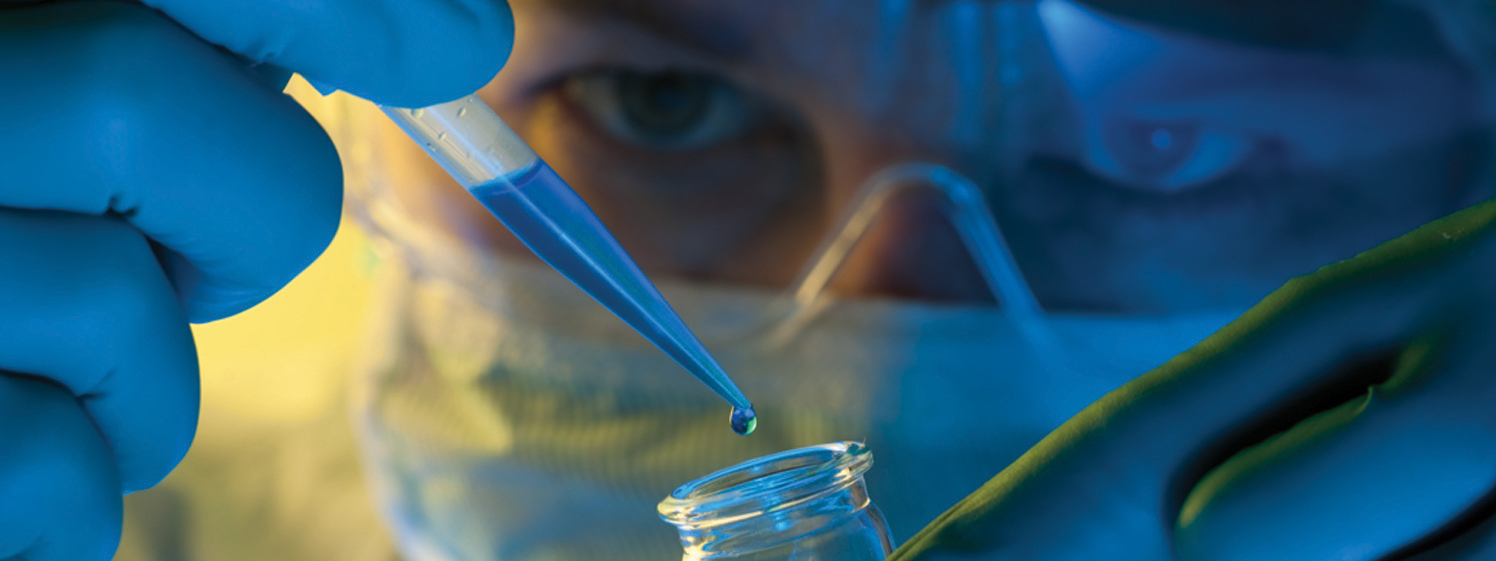
Turn evidence into answers — and build a career solving real-world crime
Forensic science is about uncovering the truth using science. On this course, you'll learn how evidence from crime scenes - like DNA, fingerprints, chemicals, and trace materials - is collected, analysed, and used to support criminal investigations.
This degree is designed to prepare you for a career. You'll develop practical lab skills, critical thinking, and investigative techniques used by real forensic professionals, so you graduate ready to step into the job market.
This course combines hands-on experience, career-focused teaching, and clear progression routes - helping you feel confident about your future from the start.
My time at the University of Lincoln can be summed up in on word...incredible! I learnt so much in my three years. The modules and content were interesting, informative, and inspiring. The lecturers are amazing at explaining things and staff also go the extra mile to support you.

James Gridley
BSc (Hons) Forensic Science
Why study Forensic Science at Lincoln?
Accredited and recognised
Accredited by the Chartered Society of Forensic Sciences
Career-focused from the start
Learn skills directly linked to forensic and scientific careers — not just theory
Hands-on practical experience
Participate in regular lab work to build confidence using industry- relevant techniques.
Real-world investigation skills
Understand how evidence is used in criminal cases, from crime scene to courtroom.
Develop transferable skills
Problem-solving, analytical thinking, and attention to detail — valued across many industries.
Supportive learning environment
Ideal if you’re interested in science but still exploring your exact career path.
Crime Scene House
Dan Matthews, programme leader for BSc (Hons) Forensic Science at the University of Lincoln introduces our Crime Scene House facility in the Think Tank.
What you'll learn
This course teaches you how science is applied to real investigations, and why it matters.
You’ll explore areas such as:
- Crime scene investigation — how evidence is identified, collected, and preserved.
- Forensic biology and DNA analysis — understanding how biological evidence links people to crime scenes.
- Forensic chemistry — analysing substances like drugs, toxins, and trace materials.
- Evidence interpretation — evaluating findings and understanding their limitations.
- Legal context — how forensic evidence is presented and challenged in court.
By the end of the course, you’ll be able to:
- Analyse and interpret forensic evidence confidently
- Apply scientific methods to complex problems
- Communicate findings clearly — essential for legal and professional settings
Most modules on this course are assessed using a mixture of examinations and coursework. Coursework includes practical reports, project work, oral presentations, and written submissions.
Modules
Module Overview
This module aims to provide students with the necessary basic theoretical and conceptual principles necessary in analytical chemistry. It offers a platform upon which students will build as they develop their analytical skills and understanding in the later stages of their programme. Furthermore, students are encouraged to develop the practical skills necessary for all future analytical practical applications.
Module Overview
This module is concerned with the skills required to protect, record, process and interpret a crime scene. Emphasis is placed on the role of crime scene investigation in the ‘forensic process’. The process of crime scene investigation is examined from scene preservation and recording (e.g. sketches and photography) to evidence recovery, packaging and documentation. The need for avoidance of contamination of the crime scene and for the subsequent continuity and integrity of the recovered evidence form an integral component of the module.
Module Overview
This module introduces students to professional practice in forensic science. This is put into the context of the legal system of England and Wales and the requirements and expectations of forensic science, those that work in the field and the expert witness. This module will explain the process of forensic practice within the laboratory, including areas such as chain of custody, contemporaneous note taking, standard operating procedures and quality control.
Module Overview
This module provides an overview of the anatomical structure and physiology of key systems of the human body. The students will learn about the levels of organization of the human body, and they will study the anatomy, physiology and regulation of the major organ systems, including the integumentary system, the nervous and endocrine systems, the skeletal and muscular systems, as well as the digestive, cardiovascular, respiratory, lymphatic, immune and reproductive systems.
Module Overview
Introduction to the Life Sciences is designed to provide a foundation for students to develop their knowledge and understanding of fundamental cell biology, biochemistry and genetics in the context of life sciences.
Module Overview
This module builds on the level 1 Crime Scene Investigation module and focuses on the detection, recovery, analysis and interpretation of a wide range of evidence found at a crime scene. In considering this variety of evidence, students will develop an understanding of what implications the recovery of one type of evidence will have on other evidence present on the exhibit or at the scene i.e. the need for a holistic approach to crime scene investigation. Students will explore a wide range of complex evidence types and the latest techniques used to examine them. As part of the module students will undertake the examination of a complex crime scene where they will be required to collect, analyse and interpret a range of evidence types.
Module Overview
The module is designed to provide students with the underpinning knowledge related to the analytical process, including instrumentation, automation and the application of techniques for the separation, speciation, and elucidation of structural information of analytes. The module also introduces students to associated experimental planning and advanced validation strategies.
Module Overview
This module introduces students to the basic concepts of forensic archaeological science and will aim to address the underlying principles of forensic archaeological recovery of human remains in a variety of contexts, including criminal, war crimes and mass disaster cases. It will cover practical aspects such as the search and recovery of human remains and examine other related evidence types. Theoretical considerations will be given to the processes of human decomposition and aspects of forensic taphonomy will also be examined.
Module Overview
This module covers various aspects of professional practise, building on some of the principles and content in Professional Practice 1, and helping prepare students for future content of the course, as well as providing essential skills for employability within any area they choose after graduation. Employability is embedded into this module as part of the course’s professional practice strand. In this module, students will be taught by staff from the Careers and Employability centre and will be shown how to construct effective applications for jobs within the forensic science industry through creation of individual CVs, and applications for industry relevant jobs.
Module Overview
This module is designed to develop an understanding of the importance of marks and trace materials, such as hairs, fibres, glass, footwear and latent fingermarks, as evidence. This would include their detection, recovery, analysis and the interpretation of results gained in a forensic context. The issues of transfer and persistence of such materials is also highlighted, and the need to consider this throughout the above processes.
Module Overview
Molecular biology is of critical importance when understanding biological systems. This module is designed to provide students with an insight into the techniques used and applied by molecular biologists in a number of specific contexts. The module will explore the origins of molecular life on Earth, before examining the molecular control of eukaryotic replication, transcription and translation. The focus will then move to in vitro experimentation including DNA isolation, amplification, sequencing and manipulation; before looking at applications of molecular biology and how they can be applied to our understanding in areas such as population genetics and health and disease.
Module Overview
Students can contextualise the skills learnt on their course and develop new, job-specific skills through a work placement.
Module Overview
The School believes that an option to study overseas is a valuable educational opportunity for our students. Provision of this option supports the educational aims of the School of Life Sciences and enhances the distinctiveness of its degrees at Lincoln. The optional year is intended to:
- enable students to benefit from studying within a cross cultural environment;
- expose students to a wider academic and cultural experience;
- enhance their future employment opportunities;
- by increasing their cultural and professional mobility.
This module is optional for students within the School. Study Abroad is a year long module which enables students to spend a year studying abroad at one of the University's approved partner institutions. Eligible students must have completed their second year of study to a satisfactory standard and successfully completed the application process for the year abroad.
During the year spent abroad, students share classes with local students and study on a suite of locally-delivered taught modules which have been approved in advance by the University. Upon their return, as part of the assessment for this module, students are required to critically reflect upon their experience of living and studying in a different cultural environment and the skills acquired.
Module Overview
In this module, students will follow a case from the crime scene to Court including recording, processing and interpreting evidence. After the crime scene has been processed, students will critically evaluate the evidence and demonstrate their forensic awareness in order to create a case strategy. Once the results have been received, students will interpret the data and write a report or statement suitable for Court. This will be followed by a mock Court presentation on the case.
Module Overview
This module aims to apply the knowledge gained in previous modules to the forensic analysis of biological materials and molecules of biological origin. Specialised fields of application will be covered in depth to allow understanding of how biological expertise may be used in the forensic arena. Current and emerging research relevant to the development of these applications will be considered.
Module Overview
This module provides a context for the chemical, physiological and analytical content introduced at levels 4 and 5. It deciphers the complex and dynamic world context of drugs of abuse and intrinsic challenges faced by analytical chemists. It also covers the chemistry and legislation of controlled substances and chemical precursors as well as the different classes of drugs. The module also covers the ante- and post-mortem toxicology of drugs, relates concentration to physiological effect as well as considers appropriate samples and analytical strategies used in forensic toxicology.
Module Overview
This module introduces the chemistry and physics of fire and explosives and considers the investigation of fire and explosion scenes with an emphasis on arson and the use of improvised explosive devices. The challenges of evidence recovery, laboratory examination and chemical analysis are covered. This module also considers the various aspects of nuclear terrorism, in the context of global security. The underpinning science and the forensic investigation of nuclear materials for intelligence building is discussed.
Module Overview
This module is designed to introduce the student to the fundamentals of forensic anthropology. Students will be introduced to forensic anthropology before embarking on a series of lectures and practical sessions covering human osteology and the methods used to estimate a biological profile; sex, ancestry, age and stature estimation. This module will also introduce the student to the various pathological conditions and traumatic injury affecting human bone. This module will equip the students with the fundamental knowledge and skills to participate in forensic anthropological analysis by preparing a case report on a skeleton.
Module Overview
In this module, students undertake a project under supervision from a member of staff. The module will develop students' project planning and independent learning skills and their capacity for the critical appraisal of scientific literature. Research governance will also be examined including research ethics, COSHH and risk assessments and their importance in order to safely and appropriately carry out a programme of research. This module provides students with an opportunity to demonstrate original and critical thought, as well as to build analytical and project-management skills. Projects may be in the laboratory or field, involve systematic literature reviews, surveys, or meta-analysis of pre-collected data. The findings of the project will be written up and also presented orally.
Module Overview
The forensic field course will give students the opportunity to experience first-hand the work of the forensic scientist within a national or international context. This may take place in a country other than the UK. Students will also familiarise themselves with the professional skills required to carry out this type of work.
Module Overview
This module provides students with an opportunity to focus on the public understanding of forensic science. Students will work independently to identify one or more disciplines that are used within forensic investigations, but also known to the general public. Examples could include DNA, fingerprints, gunshot residue, fire debris analysis or analysis of drugs. Once the discipline has been identified, students will, through critical analysis of the literature, work to build a comprehensive understanding of the history of the discipline, its current use, benefits and drawbacks, its place within forensic regulations and the current legal framework.
† Some courses may offer optional modules. The availability of optional modules may vary from year to year and will be subject to minimum student numbers being achieved. This means that the availability of specific optional modules cannot be guaranteed. Optional module selection may also be affected by staff availability.
Support and student experience
Lincoln is designed to help you succeed.
You’ll benefit from:
- Academic support – help with study skills, assignments, and scientific techniques
- Personal tutors – guidance throughout your degree
- Careers support – CV help, career planning, and job applications
- Wellbeing services – support for mental health and adjusting to university life
You’re not expected to figure everything out alone. Support is built into your experience.
Placements
Students undertaking Forensic Science can benefit from an optional placement year opportunity between their second and third years. Please note, students
are expected to cover their own travel, accommodation, and living costs.
- Placement opportunity between second and third year
- Students are required to cover their own living costs
Crime Scenes of Tinseltown
The University of Lincoln's Heather Grant examines the crime scenes of Se7en, exploring what the film gets right and wrong about DNA, fingerprints, biological evidence and the realities of real-world forensic investigation.
Careers and future opportunities
A forensic science degree opens doors to a range of careers, not just in forensic labs or at crime scenes.
Typical career paths:
- Forensic scientist
- Crime scene investigator
- Analytical or laboratory scientist
- Toxicologist
- Roles in policing or intelligence
- Scientific roles in healthcare, pharmaceuticals, or environmental sectors
Further study options:
- MSc in Forensic Science or Forensic Toxicology
- Specialist postgraduate training
- Teaching or research careers
Reassurance for you:
- You graduate with practical lab experience, not just theory
- You gain transferable skills valued across multiple industries
- You’re not locked into one career path — this degree keeps your options open
Entry Requirements 2027-28
United Kingdom
104 to 112 UCAS Tariff points from a minimum of 2 A Levels or equivalent Level 3 qualifications, to include 32 points from Biology, Chemistry or Applied Science.
If you are eligible for a contextual offer, a one grade or 8 UCAS Tariff point reduction to the standard entry requirements will be applied. Subject specific requirements will still be required as part of the standard entry criteria.
A Level: BBC to include a Grade C in Biology, Chemistry or Applied Science.
BTEC Extended Diploma: DMM in Applied Science will be accepted. Forensic Science and Criminal Investigation accepted depending on modules studied.
(Please include units on application)
We will accept a Pearson Level 3 Alternative Academic Qualification BTEC National (equivalent to 1 A Level) in Medical Science or Applied Science to meet the subject specific requirement: Merit
T Level: Merit in Science
Access to Higher Education Diploma: 112 UCAS points to be achieved from 45 Level 3 credits, including 32 points from 15 credits in Biology or Chemistry.
International Baccalaureate: 29 points overall to include a Higher Level 4 in Biology or Chemistry.
GCSEs: Minimum of three at grade 4 or above, which must include English and Maths. Equivalent Level 2 qualifications may be considered.
The University accepts a wide range of qualifications as the basis for entry and do accept a combination of qualifications which may include A Levels, BTECs, Extended Project Qualification (EPQ).
We may also consider applicants with extensive and relevant work experience and will give special individual consideration to those who do not meet the standard entry qualifications.
International
Non UK Qualifications:
If you have studied outside of the UK, and are unsure whether your qualification meets the above requirements, please visit our country pages
https://www.lincoln.ac.uk/studywithus/internationalstudents/entryrequirementsandyourcountry/ for information on equivalent qualifications.
EU and Overseas students will be required to demonstrate English language proficiency equivalent to IELTS 6.0 overall, with a minimum of 5.5 in each element. For information regarding other English language qualifications we accept, please visit the English Requirements page
If you do not meet the above IELTS requirements, you may be able to take part in one of our Pre-sessional English and Academic Study Skills courses.
For applicants who do not meet our standard entry requirements, our Science Foundation Year can provide an alternative route of entry onto our full degree programmes:
https://www.lincoln.ac.uk/course/sfysfyub/lifesciences/
If you would like further information about entry requirements, or would like to discuss whether the qualifications you are currently studying are acceptable, please contact the Admissions team on 01522 886097, or email admissions@lincoln.ac.uk
Contextual Offers
At Lincoln, we recognise that not everybody has had the same advice and support to help them get to higher education. Contextual offers are one of the ways we remove the barriers to higher education, ensuring that we have fair access for all students regardless of background and personal experiences. For more information, including eligibility criteria, visit our Offer Guide pages. If you are applying to a course that has any subject specific requirements, these will still need to be achieved as part of the standard entry criteria.Is this course right for you?
This course could be a great fit if you:
- Are interested in science but want a clear career direction
- Enjoy problem-solving and thinking critically
- Like the idea of hands-on lab work
- Are curious about crime, investigation, and how evidence works
- Want a degree that keeps multiple career options open
Fees and Funding
University Study is a major investment, so it’s important to understand the costs and support available. A full breakdown of the fees associated with this programme can be found below. Eligible students may be able to access scholarships and bursaries to help with study costs.