Why study Chemistry at Lincoln?
Build practical skills employers actively seek
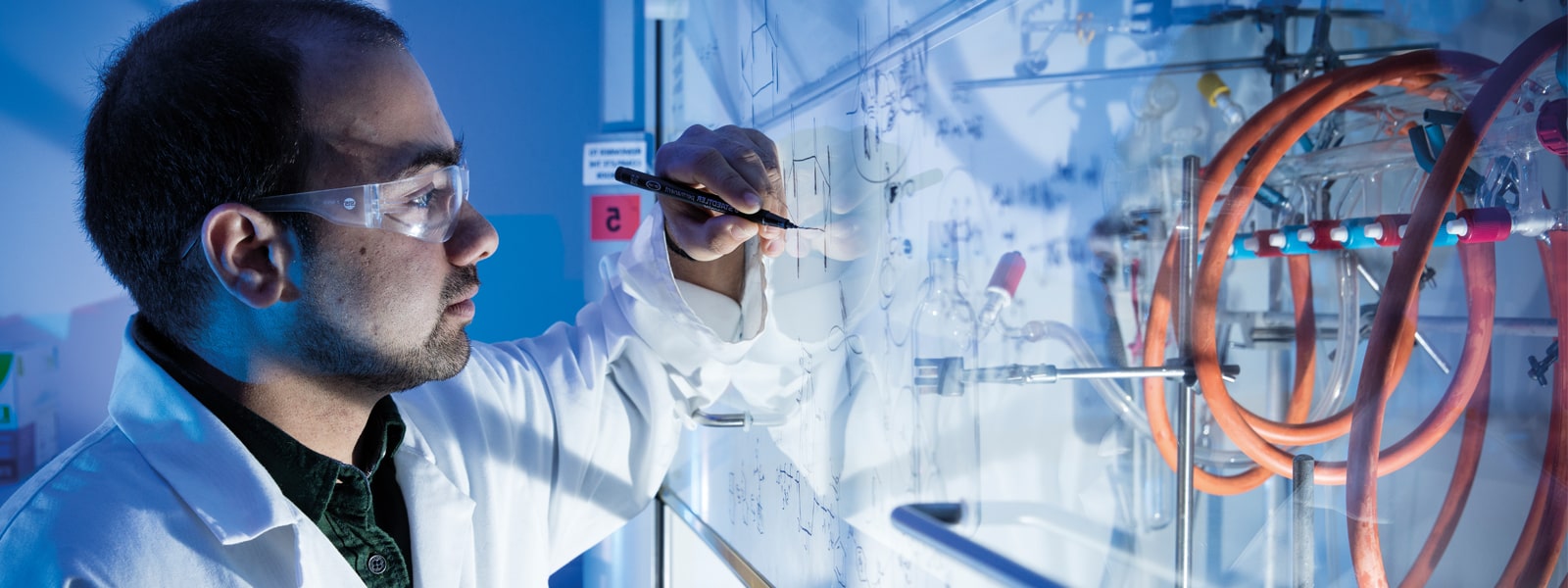
You’ll spend significant time in laboratories developing real scientific techniques, data analysis skills and problem-solving abilities that translate directly into graduate careers. Across the degree, you can build experience in synthesis, purification, spectroscopy, chromatography, molecular analysis, laboratory safety, and scientific reporting.
Integrated Master's study
The MChem combines undergraduate and advanced-level study in one degree, helping you develop deeper subject knowledge, stronger research skills, and confidence for specialist scientific pathways. This allows you to build progressively from core chemistry and practical skills towards more independent, advanced and professionally focused work.
Learn across the full spectrum of chemistry
Study the core areas of chemistry while exploring how they connect to industries including healthcare, pharmaceuticals, energy, sustainability, food science, analytical science, materialism and advanced manufacturing. This broad foundation helps keep your career options open while allowing you to develop interests in areas that matter to the future.
Develop career-ready experience
You’ll gain experience in: Laboratory techniques and instrumentation Scientific communication and reporting Data handling and analysis Research and investigative skills Teamwork and project management Problem-solving in applied chemistry contexts Health, safety, and professional laboratory practice Sustainability, green chemistry, and modern industrial challenges
Study in a supportive environment
Chemistry at Lincoln is designed to help you understand where your skills can take you. You’ll explore how chemistry supports sectors such as clean energy, pharmaceutical science, materials development, quality control, environmental analysis, biotechnology, and manufacturing. You’ll also develop transferable skills that are valuable beyond the laboratory, including communication, evidence-based thinking, and project planning.
Explore future pathways
A Chemistry degree opens the door to a wide range of career opportunities, including scientific research, pharmaceuticals and healthcare, environmental science and sustainability, energy and renewables, materials science and chemical manufacturing, analytical science and quality control, food and biotechnology, and consumer products. Graduates can also pursue careers in education and science communication, progress into graduate-entry medicine, or continue their studies through postgraduate research and specialist qualifications.
Learn in modern scientific facilities
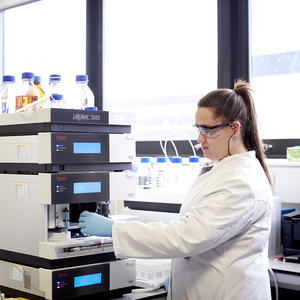
You’ll work with specialist laboratory equipment and analytical tools that reflect professional scientific environments. Practical learning is supported by access to modern instrumentation and techniques used in areas such as spectroscopy, chromatography, separation science, imaging, and molecular analysis.
/prod01/university-of-lincoln-cdn-pxl/media/responsive2017/images/openday/DSC04469-1000X700.jpg)
/filters:format(webp)/prod01/university-of-lincoln-cdn-pxl/media/responsive2017/images/course/accreditationlogos/RSC,Logo,600X400.jpg)
/filters:format(webp)/prod01/university-of-lincoln-cdn-pxl/media/responsive2017/images/Open,Days,Summer,640X426.jpg)