Module Overview
This module focuses on encouraging students to develop a responsible approach to product development, and creates an awareness of sustainability in design. Students have the opportunity to explore and challenge issues surrounding social vanity, interaction and exclusivity, in addition to understanding the need of developing markets and appreciating strains on natural resources. The module aims to promote an understanding and relevance of soul references in culture and developing an appreciation that changes in society can influence the range of creative responses available.
Module Overview
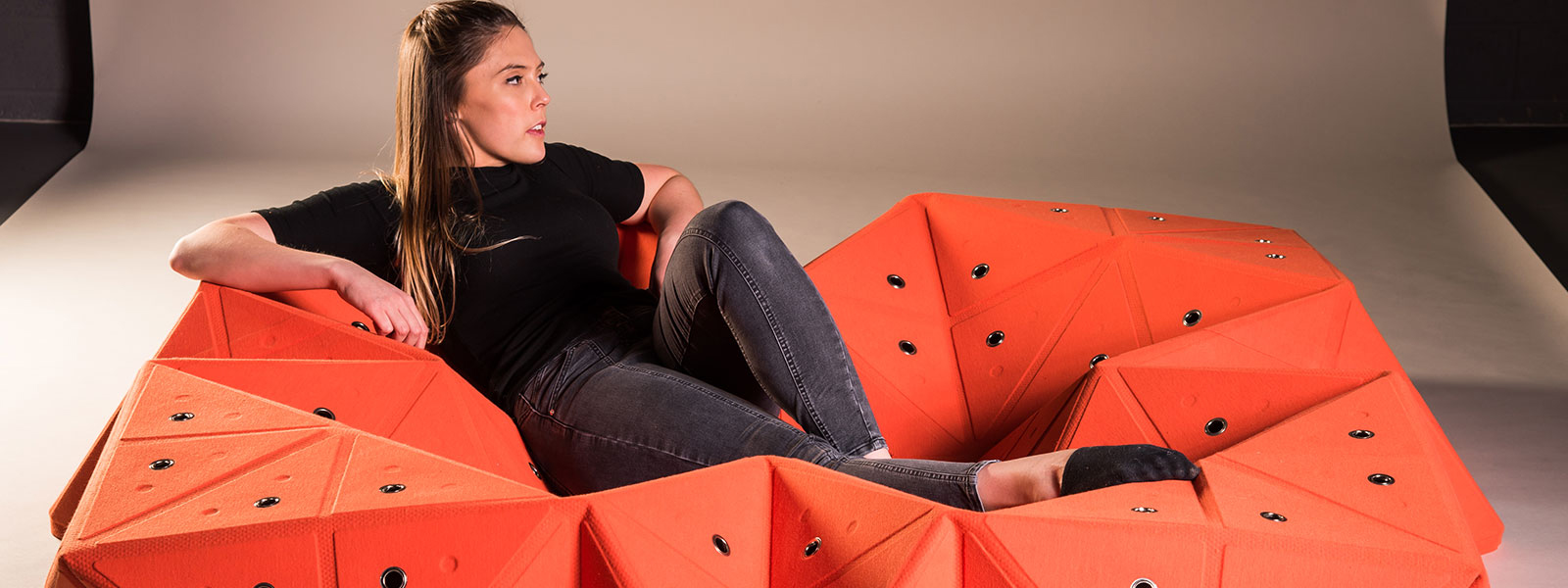
This module explores emotional design as a concept-driven and materially grounded design practice, focusing on how three-dimensional objects can shape experience, perception, and meaning beyond function alone.
Students investigate how emotional intent can operate as the starting point for design, using form, material, scale, proportion, and detail to explore how objects are encountered, interpreted, and valued. Emphasis is placed on making as a mode of enquiry, where physical experimentation and iteration are used to develop and test ideas rather than simply execute predetermined solutions.
Through studio-based projects, students develop tight but exploratory three-dimensional outcomes that combine emotional presence and experiential clarity with function. The module encourages designers to engage critically with ambiguity, constraint, and resolution, ensuring that emotional intent is carried by the object itself rather than reliant on explanation.
Module Overview
The "Interdisciplinary Collaboration" module offers an exciting and dynamic learning experience for students in graphic design, creative advertising, illustration, and product design. Each year, the module's projects are tailored to reflect the latest trends and needs in the design industry, ensuring that students gain relevant and cutting-edge skills. With a focus on user experience design, AI in design, influencing and content creation, virtual reality, and design for social change, students will work on projects that challenge their creativity and technical abilities. This module is ideal for those looking to stay ahead in the fast-paced world of design and make a meaningful impact through their work. Additionally, it provides an opportunity for students to shape their own degree, offering pathways for further elective specialisms in Level 3. Students will also have the chance to learn and utilise new industry tools and technologies, and work in new groups outside of their existing course, fostering interdisciplinary collaboration that reflects the current design industry.
Module Overview
This module focuses on the design and resolution of user experiences, where ideas are developed into clear, usable, and communicable outcomes. Students learn how experiences are structured, refined, and finessed so they can be understood and engaged with by others.
Emphasis is placed on defining users, contexts, and requirements, and on organising interactions into coherent journeys across physical and digital touchpoints. Students explore how clarity, feedback, sequencing, and flow influence user understanding and confidence.
The module develops professional approaches to experience design through prototyping, testing, and iteration. Digital tools including CAD, interface design software, animation, and visualisation are used to model, test, and communicate experiences, supporting the delivery of resolved, user-facing design outcomes.
Module Overview
The Industry Placement Year is an exciting opportunity for students to take a year out of formal study to gain real-world experience in the creative industries. Whether you’re looking to build industry connections, develop professional skills, or explore career options, this year will give you a full-time, hands-on experience within a creative organisation.
This year is a collaborative experience between you, your employer, and the University—ensuring that you get the most out of your time in a professional setting.
Module Overview
This module provides an opportunity for students in the Lincoln School of Design & Architecture to spend a semester in Year 2 studying at one of the University’s partner institutions. This opportunity has both academic and personal development dimensions.
In academic terms, during the semester abroad students undertake models that are equivalent to 60 credit module and content at one of the UoL partner institution in semester B.
Participation in study-abroad also offers unique opportunities for personal student development in the wider sense. Although students will be supported through the application process by the Module Co-ordinator and colleagues at the partner institution, much of the responsibility for organising the time abroad rests with the student. Study abroad offers the opportunity for students to develop graduate attributes, a global mindset and transferrable skills as exercise resilience, flexibity and open mindedness when adapting to and working effectively within a different academic culture and environment.
Students must submit an application to the School discuss why they wish to participate in a study period abroad.
Module Overview
This module is optional for undergraduate students within the College of Social Sciences and Humanities. Study Abroad enables you to study at one of the University’s approved partner institutions.
During the time spent abroad, you can share classes with local students and study modules at the partner institution which have been approved in advance by the University. As many partner institutions support internships, you may choose to combine study with work and/or a period of volunteering.

/filters:format(webp)/prod01/university-of-lincoln-cdn-pxl/media/responsive2017/Jason,Bradbury,PD.jpg)
/filters:format(webp)/prod01/university-of-lincoln-cdn-pxl/media/responsive2017/images/Open,Days,Summer,640X426.jpg)
/filters:format(webp)/prod01/university-of-lincoln-cdn-pxl/media/responsive2017/ba,architecture,resized.jpg)
/filters:format(webp)/prod01/university-of-lincoln-cdn-pxl/media/responsive2017/images/course/studentworkshowcase/interiorarchitectureanddesign/IAD,Banner,2020.jpg)
/filters:format(webp)/prod01/university-of-lincoln-cdn-pxl/media/responsive2017/images/course/coursebanner/Illustration,banner.jpg)
/filters:format(webp)/prod01/university-of-lincoln-cdn-pxl/media/responsive2017/images/course/coursebanner/Graphic,Design,Banner.jpg)