Skip to content

Clearing offers from 48 UCAS tariff points. Subject-specific requirements still apply. See the entry requirements section for details.

Turn your interest in sport, health, and performance into a career backed by science.

If you're curious about how the body works, how athletes improve performance, or how exercise impacts health and wellbeing, this course gives you the knowledge and practical skills to turn that interest into a career.

Sport and Exercise Science combines the key discipline areas of physiology, anatomy, biomechanics, psychology, strength and conditioning, and nutrition to understand how people perform, why people participate, and what impacts health and wellbeing. You'll learn how to use theory and practise skills in both industry-standard facilities and real-world settings.

This course is built around where it can take you: careers in sport performance, health, rehabilitation, and beyond with the practical experience to get you there.

Why study Sport and Exercise Science at Lincoln?

Recognised with accreditation Endorsed by the Chartered Association of Sport and Exercise Science (CASES), the UK's professional body for sport and exercise sciences.

Career-focused from the start Develop skills used in sport science, coaching, health, and performance roles.

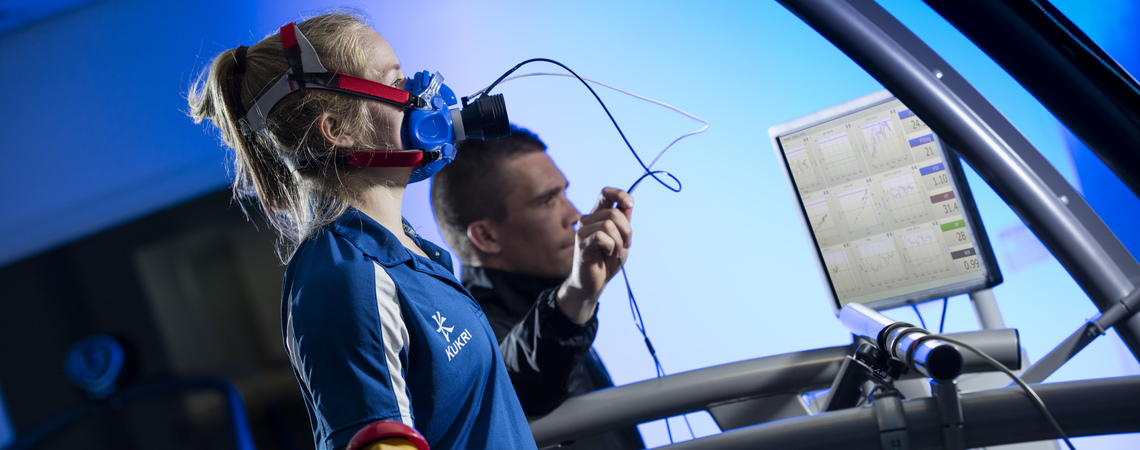
Hands-on learning Work in specialist labs, not just lecture halls. 

Real-world experience Opportunities to apply your knowledge through placements and applied projects.

Broad career pathways Not just elite sport: health, wellbeing, rehabilitation, teaching, and more.

Designed for flexibility Ideal if you’re interested in sport but not fixed on one career yet.

Specialist sport science facilities CASES-accredited Human Performance Centre designed to support practical learning.

Lincoln gives you more access to support, equipment, and teaching staff, helping you build confidence and skills faster. 

What you'll learn

This course is designed to help you understand how we perform, adapt, and recover and how to apply that knowledge in real situations.

You’ll explore:

  • Physiology How the body responds to training and exercise.
  • Biomechanics How movement works and how to improve it.
  • Psychology How mindset affects performance, participation, and wellbeing.
  • Strength and Conditioning How to improve physical performance and movement quality.
  • Nutrition How the body uses food and water to support performance and health.
  • Performance analysis Using data and technology to improve outcomes.
  • Health and wellbeing How exercise supports long-term health.

Just as important, you’ll build practical skills employers look for:

  • Using specialist lab equipment
  • Analysing performance data
  • Working with individuals and teams
  • Communicating scientific insights clearly

The course may be assessed through a variety of means, including coursework, examinations, written reports, and oral presentations.

Modules

Module Overview

This module aims to develop knowledge of the mechanics that underpin human motion, identifying the internal and external forces acting on the human body and the effects of these forces. It will involve the delivery of the mechanical foundations of movement and lab-based data collection techniques to investigate the relationship between theoretical principles of biomechanics and sports performance. Students will develop competency in collecting, analysing, and communicating data suitable for biomechanical analysis, with particular emphasis on application to sport and exercise. Students will typically develop skills in critical thinking, active learning, digital and data literacy, and curiosity.

Module Overview

This module builds on the introduction to research in psychology and sport science in Semester A by exploring in greater depth how to design appropriate studies and communicate research findings effectively. Using a combination of lectures and workshops, students will learn how to plan and conduct research using both quantitative and qualitative methods, analyse quantitative and qualitative data, and present findings in a research report. Typically, real-world examples and practical activities will be used to help develop students’ confidence as emerging independent researchers. This module will lay the foundations for more advanced research tuition in year 2.

Transferrable Skills Building on the previous research skills module, this module will further develop the previously identified set of Skills for Life: global mindset, active learning, critical thinking, complex problem solving, digital & data literacy, leadership & influence, persuasion & negotiation and equality & inclusion. Students will continue to incorporate consideration of researcher and participant sample bias (i.e. WEIRD & non-WEIRD participants) as well as equality & inclusion in research practices. Students will also continue to work in groups require critical thinking and active learning to solve complex problems. Digital and data literacy skills will continue to be strengthened throughout.

Module Overview

The module will help students recognise key nutrition terminology and acquire knowledge on the scientific principles of human nutrition, metabolism and digestion by developing theoretical and practical understanding of the key concepts. Students will be encouraged to appraise human nutrient requirements, apply dietary reference values and government recommendations for population health and appreciate the consequences of inadequate intake. Students will explore the anatomy and physiology of digestion, concepts of energy requirements and balance, the key metabolic functions of macronutrients and essential roles of micronutrients which contribute to balanced dietary intake. Practical and exploratory components will include evaluation of public health or athletic community guidance related to nutrition in order to encourage critique of published claims and advice and develop students’ capability in translating theoretical evidence into safe and effective best practice guidance. Key life skills developed throughout this module include sustainability, equality and inclusion, active learning and self-leadership and wellbeing.

Module Overview

This module develops a basic introduction and knowledge of the structure and function of key human anatomical features of peripheral joints and spinal region, with emphasis on those associated with the action of the musculoskeletal and central and peripheral nervous systems. Students will critically engage with current concepts, contemporary research and theoretical knowledge to develop their knowledge of anatomical concepts and terminology essential to understanding both function and dysfunction in human movement to be able to apply this knowledge in future applied practice.

Module Overview

The module aims to provide a foundation knowledge of the structure and function of the human body and, as such, will focus on the anatomical and physiological integration necessary for human movement production. Initial examination will develop an understanding of the key physiological support systems and the relationship between their major anatomical structures, physical functions and homeostatic control, both at rest and during physical activity. In combination with underpinning physiological knowledge, the student will begin to explore the contribution and interaction of the cardiovascular, pulmonary, skeletal, endocrine and neuromuscular systems during practical laboratory skill development. The specific objectives of the module are to: (1) provide foundation knowledge of the structure and function of the human body; (2) establish a logical understanding of key biological processes and the interaction between physiological systems during both rest and muscular activity (including sport/exercise); and (3) introduce laboratory methods and equipment for physiological analysis of health and exercise.

Module Overview

An appreciation of research methods is critical for understanding empirical disciplines like psychology and sport science. This module introduces students to some of the basic concepts underlying qualitative and quantitative research methods. It focuses on foundational understanding of knowledge production including epistemology, ontology, ethics, design sampling, analysis tools and writing skills. This module provides the foundations for research in psychology and sport science that students will be able to build on during their degree and beyond.

The module will address the following Skills for Life: global mindset, active learning, critical thinking, complex problem solving, digital & data literacy, leadership & influence, persuasion & negotiation and equality & inclusion. More specifically, on this module, students will develop their global mindset through considering bias and non-WEIRD (Western, Educated, Industrialized, Rich, Democratic) participant groups in research. Students will be active learners, required to think critically and solve complex problems in teams applying leadership, persuasion & negotiation skills while centring equality and inclusion. Digital and data literacy skills will be strengthened throughout.

Module Overview

This module introduces students to key concepts, theories and applications of psychology in sport, exercise and physical activity settings. Students will develop understanding of how psychological factors influence participation and performance, and how sport and physical activity can impact psychological wellbeing and other outcomes. Students will typically develop skills in active learning, open-mindedness, curiosity, and emotional intelligence.

Module Overview

The module will provide a foundational knowledge and introduction to key concepts within strength and conditioning. Students will develop an understanding of the role, scope of practice and code of conduct of the strength and conditioning coach. Fundamental elements of athlete training are to be introduced from both theoretical and practical perspectives delivered through in-person lectures and practical sessions. Students will develop the ability to demonstrate knowledge and application of technical models for key strength training movements. Students will develop fundamental coaching and communication skills essential for strength and conditioning delivery. Students will typically develop skills in self-reflection, written and oral communication and teamwork.

Module Overview

This module aims to showcase how research is applied in practice, in policy and in the context of the Sustainable Development Goals (SDG) and social responsibility. In lectures, students will be introduced to examples of how research is applied in the workplace, how research is used to shape policy, and how research relates to the SDGs and social responsibility. In parallel, a series of workshops will teach students to apply this knowledge. This module develops the following Skills for Life: global mindset, leadership & influence, active learning, critical thinking, solving complex problems and equality & inclusion. Specifically, on this module, students will develop their global mindset and leadership & influence through considering how research is applied in a global context, including contributing to the SDGs and writing for a general audience. By developing a dissertation proposal, students will be active learners, required to think critically and solve complex problems while centring equality and inclusion.

Module Overview

This module aims to use pathophysiology and epidemiology to examine the relationship between physical activity, sedentary behaviour, physical fitness, and health. Students can learn both the risks and benefits of physical activity and exercise, understanding the contraindications to exercise for a range of special population groups. Students will be supported in areas such as the measurement of health-related fitness for at-risk individual and make suitable recommendations for exercise to benefit health. The specific objectives of the module are to: (1) establish an understanding of the dose-response relationship between physical activity, sedentary behaviour, physical fitness and health; (2) develop an understanding and knowledge of key health problems and their pathophysiology; (3) provide the required knowledge to conduct safe and effective screening and pre-exercise assessment for sedentary individuals; and (4) develop an understanding of how to produce suitable exercise recommendations for specific individuals.

Module Overview

This module aims to enable students to develop both their knowledge and application of more advanced biomechanical principles that underpin human movement. It will involve the delivery of applied theoretical concepts with specific application to common sporting movement patterns. It will involve advanced practical data collection and analysis techniques, with emphasis on data handling and interpretation to assess biomechanical theories that are fundamental to sporting performance. Students will typically develop skills in critical thinking, active learning, digital and data literacy, and curiosity.

Module Overview

This module aims to enable students to consolidate and expand their knowledge of the foundations of sport physiology, developed at Level 1 by encouraging the application of the fundamental principles of anatomy and physiology. Students will learn how physiological assessments are used to evaluate sporting performance and they will undertake a range of practical assessments related to key performance-related components of fitness. The specific objectives are to: (1) develop theoretical understanding of sports specific components of fitness; and (2) improve independent proficiency in monitoring, assessing, and evaluating physiological performance using underpinning theoretical knowledge.

Module Overview

This module will build on the foundations of human nutrition introduced at Level 4 and encourage students to develop and apply theoretical understanding and practical skills to nutritional support with a range of clients with specialist requirements based on health status or athletic requirements. The content will explore key nutritional interventions in terms of empirical support, client relevance, safety and practical application and include exploration of monitoring and evaluation techniques. Key life skills developed throughout this module include curiosity, digital and data literacy, leadership and influence, and persuasion and negotiation.

Module Overview

This module aims to enable students to develop knowledge and application of strength and conditioning practices. Building on the foundations provided by the core Strength and Conditioning module there will be an increased emphasis on the theoretical underpinning to neural, molecular and structural adaptations and application to variety of training modalities. Students will typically develop skills and competencies in assessing/testing individuals, developing competency to coach advanced lifting techniques such as Olympic lifts, utilising a variety of training modalities to improve athlete performance and planning, conducting and delivering coaching sessions.

Module Overview

This module will facilitate a deeper level of knowledge, understanding and critical awareness in key areas of health and exercise psychology. Through the evaluation and critical appraisal of behaviour change approaches/models, theories, and research evidence, students on this module will consider how knowledge is developed and applied in the context of physical activity/exercise promotion and maintenance. Students will be required to challenge existing knowledge and best practice across developing and topical lines of research, which will foster skills such as critical thinking, curiosity, and open-mindedness.

Module Overview

This optional, year-long module enables students to spend a year studying abroad at one of the University’s approved partner institutions. Eligible students must have completed their second year of study to a satisfactory standard and successfully completed the application process for the year abroad. During the year spent abroad, students share classes with local students and study on a suite of locally-delivered taught modules which have been approved in advance by the University. Upon their return, as part of the assessment for this module, students are required to critically reflect upon their experience of living and studying in a different cultural environment and the skills acquired.

Module Overview

This module aims to enable students to develop knowledge and application in the area of data collection strategies to monitor and analyse sporting performance. It will involve the delivery of theoretical underpinning and field-based performance analysis strategies and their application to assessment of practical sport. Students will typically develop skills and competency in using specialist equipment and software and communicating data through a variety of formats. Students will typically develop skills in critical thinking, active learning, digital and data literacy, and curiosity.

Module Overview

This module will facilitate a deeper level of knowledge, understanding and critical awareness in key areas of sport and performance psychology. Through the evaluation and critical appraisal of core concepts, theories, and research evidence, students on this module will consider how knowledge is developed and applied to aid performance and psychological outcomes in sporting contexts. Students will be required to challenge existing knowledge and best practice across developing and topical lines of research, which will foster skills such as critical thinking, curiosity, and open-mindedness.

Module Overview

This module aims to create a valuable opportunity for students to gain important insights and improve their skills and prospects relevant to employment or further study (i.e. within psychology, sports science, therapy, rehabilitation or related subject areas) by undertaking relevant work experience.

Module Overview

This module aims to explore student’s ongoing professional development as a practitioner in their given specialist field. Built upon good evidence based working practices, a key purpose will be to enhance associated knowledge and competency-based skills that relate to professional practice through critical self-reflection. It is expected that students will undertake professional practice activity within or of benefit to their degree of study. Activity can include, but is not limited to, a current working professional position, support-centred consultancy or programme-based intervention activities, a continued professional development activity, interaction and observation with a senior colleague/working professional, shadowing, volunteering, mentoring or leading an area of sport and exercise science service delivery (where appropriate). Students will be required to critically reflect on their experience in relation to contemporary societal and employment issues, professional body guidelines and policies, ethical and moral dimensions, graduate skills and future ambitions. Such skill development will be underpinned by Skills for Life dimensions aligned to active learning, critical thinking, leadership and influence, and emotional intelligence.

Module Overview

This module will prepare students for carrying out independent research and applied consultancy activities in the area of sport and exercise biomechanics. Building on the knowledge and experience gained at previous levels, students will acquire skills and experience relating to the use of a range of state-of-the-art techniques for assessing human movement from both performance and injury perspectives. Extensive opportunities for practical data collection and analysis will be complemented by a focus on developing scientific rigour. Students will typically develop skills in critical thinking, active learning, digital and data literacy, and curiosity.

Module Overview

This module develops advanced knowledge and applied skills in human physiology within health contexts. Students will critically engage with current concepts, contemporary research, and theoretical frameworks, applying these to real-world scenarios in health promotion and support alongside disease prevention. The module explores contemporary topics in health physiology, including chronic disease pathophysiology, exercise prescription, progressive risk assessment, and health promotion strategies. Students will evaluate how physiological theory and evidence-based practice inform the design and implementation of interventions aimed at improving population health. Students will typically develop skills in critical thinking, complex problem-solving, equality and inclusion, emotional intelligence, and intercultural awareness.

Module Overview

This module develops advanced knowledge and applied skills in human physiology within performance contexts. Students will critically engage with current concepts, contemporary research and theoretical knowledge, applying these to real-world scenarios in performance. Students will examine contemporary topics in performance physiology and critically evaluate how physiological theory and research inform the assessment and enhancement of athletic performance. Students will typically develop skills in critical thinking, complex problem-solving, equality and inclusion, emotional intelligence, and intercultural awareness.

Module Overview

The module will be structured around the critical application of strength and conditioning and factors influencing the preparation of athletes for physical performance. Learning will be supported through delivery of both lectures, practical sessions and applied practice. Students will typically develop skills in evidence-based application of theory, critical thinking, self-reflection, practical coaching and written and oral communication.

Module Overview

This module aims to provide students with an opportunity to engage in an applied practice project within a community organisation, professional organisation or sports club setting. Students will co-produce a project that addresses real-world challenges, integrating theoretical knowledge with practical application. Specifically, the module will require students to plan, design, deliver, and evaluate a project that responds to the need and/or development of a group/individual in a relevant context or setting. Students will typically develop skills in critical thinking, complex problem solving, equality and inclusion, resilience and flexibility, active learning and open-mindedness.

Module Overview

This module will deepen students’ understanding of psychological concepts, theories and models in sport and exercise settings. Students will critically engage with contemporary research and apply theoretical knowledge to real-world scenarios, including case studies and applied interventions. Students will have the opportunity to assess an athlete’s psychological profile and explain how psychological interventions could be designed and implemented. Students will typically develop skills in critical thinking, complex problem-solving, equality and inclusion, emotional intelligence, and intercultural awareness.

Module Overview

This module provides an opportunity for an in-depth study of a particular topic relevant to the field of their particular degree and to demonstrate original and critical thought. The Dissertation module tests a student’s ability to identify an appropriate research question and to design a method that allows data collection and analysis to be conducted in order to answer the proposed research question. Students will typically develop skills in scientific literacy, critical thinking, data analysis, and written and oral communication. Skills for Life will be gained in Complex Problem Solving, Critical Thinking, Curiosity & Digital & Data Literacy.

All Dissertation projects must be derived from and/or embedded within a clear theoretical framework. Students have to demonstrate their knowledge of research skills in order to analyse the data gathered and their theoretical knowledge in interpreting the results of their study in relation to the background literature. This can be done through the use of quantitative methods, qualitative methods, or a combination. The module is assessed through the presentation of their research via a poster presentation and the production of a written thesis. The role of the supervisor is to guide them through these processes and the students will be supported through a range of masterclasses covering topics aligned to the development of the students' research.


† Some courses may offer optional modules. The availability of optional modules may vary from year to year and will be subject to minimum student numbers being achieved. This means that the availability of specific optional modules cannot be guaranteed. Optional module selection may also be affected by staff availability.

Support and student experience

At Lincoln, you’ll benefit from:

  • Academic support – help with study skills, assessments, and scientific writing
  • Personal tutors – guidance throughout your degree
  • Careers support – CV help, placements, and career planning
  • Wellbeing services – support if you need it during your studies

You’ll also have opportunities to get involved in:

  • Sports clubs and teams
  • Fitness and performance environments
  • A student community that shares your interests

The staff at Lincoln are fantastic, everyone is always happy to answer any questions students may have in order to develop their learning. Due to how the programme is taught, I feel that students develop a nice student-staff relationship, which definitely helps engagement with course content and learning materials.

International Study

Study overseas at a partner university and experience a new culture.

  • Build confidence, independence, and intercultural experience
  • You’ll pay the relevant study abroad fee to the University of Lincoln, with no tuition fees paid to the host university
  • You’ll need to cover travel and living costs
  • Funding support may be available

Placements 

Students undertaking Sport and Exercise Science can benefit from an optional placement year between their second and third years.

  • Develop practical skills and professional confidence
  • Build your CV before you graduate
  • Explore career options

Please note, students are expected to cover their own travel, accommodation, and living costs.


Careers and future opportunities

A Sport and Exercise Science degree opens more doors than most students expect.

What can you do with this degree?

Graduates go into roles such as:

  • Sport and exercise scientist
  • Strength and conditioning coach
  • Performance analyst
  • Sport and exercise psychologist (with further study)
  • Health and wellbeing advisor
  • Rehabilitation or physiotherapy pathways (with further study)
  • Teaching and educational roles (with postgraduate training) 

Industries Sport and Exercise Science graduates work in:

  • Professional and semi-professional sports teams
  • Gyms, health clubs, and fitness organisations
  • NHS and healthcare settings
  • Schools and education
  • Private performance or rehabilitation clinics

Progression after graduation

Many students progress into:

  • Teaching
  • Master’s Level study in specialist areas
  • PhD programmes

This isn’t a narrow degree. It develops transferable scientific, analytical, and communication skills that are valued across sport, health, and wider industries.

Entry Requirements 2026-27

United Kingdom

96 to 104 UCAS Tariff points.

This must be achieved from a minimum of 2 A Levels or equivalent Level 3 qualifications. For example:

A Level: CCC to BCC

BTEC Extended Diploma: Distinction Merit Merit

T Level: Merit Overall

Access to Higher Education Diploma: 96 to 104 UCAS points to be achieved from 45 Level 3 credits.

International Baccalaureate: 28 points overall.

GCSE's: Minimum of three at grade 4 or above, which must include English, Maths and Science . Equivalent Level 2 qualifications may be considered.

The University accepts a wide range of qualifications as the basis for entry and do accept a combination of qualifications which may include A Levels, BTECs, Extended Project Qualification (EPQ).

We may also consider applicants with extensive and relevant work experience and will give special individual consideration to those who do not meet the standard entry qualifications.

International

Non UK Qualifications:

If you have studied outside of the UK, and are unsure whether your qualification meets the above requirements, please visit our country pages

https://www.lincoln.ac.uk/studywithus/internationalstudents/entryrequirementsandyourcountry/ for information on equivalent qualifications.

EU and Overseas students will be required to demonstrate English language proficiency equivalent to IELTS 6.0 overall, with a minimum of 5.5 in each element. For information regarding other English language qualifications we accept, please visit the English Requirements page

https://www.lincoln.ac.uk/studywithus/internationalstudents/englishlanguagerequirementsandsupport/englishlanguagerequirements/

If you do not meet the above IELTS requirements, you may be able to take part in one of our Pre-sessional English and Academic Study Skills courses.

https://www.lincoln.ac.uk/studywithus/internationalstudents/englishlanguagerequirementsandsupport/pre-sessionalenglishandacademicstudyskills/

If you would like further information about entry requirements, or would like to discuss whether the qualifications you are currently studying are acceptable, please contact the Admissions team on 01522 886097, or email admissions@lincoln.ac.uk

Contextual Offers

At Lincoln, we recognise that not everybody has had the same advice and support to help them get to higher education. Contextual offers are one of the ways we remove the barriers to higher education, ensuring that we have fair access for all students regardless of background and personal experiences. For more information, including eligibility criteria, visit our Offer Guide pages. If you are applying to a course that has any subject specific requirements, these will still need to be achieved as part of the standard entry criteria.

Is this course right for you?

This course could be a great fit if you:

  • Enjoy sport, health and fitness, or science
  • Want a career linked to performance, health, or wellbeing
  • Like practical learning, not just theory
  • Aren’t 100% sure of your career yet but want strong options

If you’re looking for a degree that keeps your options open while building real, employable skills, this is a strong choice.

Fees and Funding

University Study is a major investment, so it’s important to understand the costs and support available. A full breakdown of the fees associated with this programme can be found below. Eligible students may be able to access scholarships and bursaries to help with study costs.

Course Fees

Find out More by Visiting Us

The best way to find out what it is really like to live and learn at Lincoln is to visit us in person. We offer a range of opportunities across the year to help you to get a real feel for what it might be like to study here.

Three students walking together on campus in the sunshine

What You Need to Know

We want you to have all the information you need to make an informed decision on where and what you want to study. In addition to the information provided on this course page, our What You Need to Know page offers explanations on key topics including programme validation/revalidation, additional costs, and contact hours.

The University intends to provide its courses as outlined in these pages, although the University may make changes in accordance with the Student Admissions Terms and Conditions.