/prod01/university-of-lincoln-cdn-pxl/media/responsive2017/images/openday/DSC04469-1000X700.jpg)
Meet Our Graduate
Hear from Saffron Mills, a BA (Hons) History graduate, as she shares why she chose to study at Lincoln and how it led to her exciting role at Bacardi.

Clearing offers from 48 UCAS tariff points. Subject-specific requirements still apply. See the entry requirements section for details.
History isn't just about what happened, it's about understanding why the world works the way it does today. On this course, you'll explore a huge variety of topics from the Norman Conquest and the Tudors to modern empires and the Global Cold War, while developing the analytical, research, and communication skills employers actively look for.
At Lincoln, you'll learn how to interpret evidence, challenge ideas, and build arguments based on historical issues that fascinate you. Whether you're aiming for a career in law, media, education, heritage, or beyond, this degree is designed to open doors.
History isn't just about what happened, it's about understanding why the world works the way it does today. On this course, you'll explore a huge variety of topics from the Norman Conquest and the Tudors to modern empires and the Global Cold War, while developing the analytical, research, and communication skills employers actively look for.
At Lincoln, you'll learn how to interpret evidence, challenge ideas, and build arguments based on historical issues that fascinate you. Whether you're aiming for a career in law, media, education, heritage, or beyond, this degree is designed to open doors.
Flexible study options
Shape your degree around your interests, by choosing from a wide range of modules and types of assessment.
Real-world relevance
Connect historical issues to modern developments such as conflict, identity, and social change.
Career-ready skills early on Learn how to analyse complex information, communicate clearly, and
think critically.
Access to specialist local resources
Including archives at Lincoln Cathedral and the International Bomber Command Centre, as well as digital tools and research support
A city rich in history
Study in a location shaped by centuries of heritage, from the ancient to the medieval and modern.
Research-led teaching
Learn from academics actively publishing and shaping the field.
Supportive learning environment
Classes focused on interaction, feedback, and guidance.
Strong employability focus
Build a portfolio of skills and experiences that translate directly into careers.
This course is designed to help you think like a historian and apply those skills beyond university.
You’ll learn how to:
As you progress, you’ll gain increasing independence, culminating in a final- year research project where you explore a topic you’re passionate about with the guidance and supervision of an expert historian.
How this connects to careers:
These skills are highly transferable and in demand across sectors like law, business, media, government, and education.
This module will examine the development of modern Britain and Britons over a period of several centuries, from the early modern into the contemporary period. It asks how major events and transformations intersected with everyday life and different individuals’ experiences. It aims both to introduce students to key historians’ arguments and interpretations of the period, and to a range of individuals’ voices from history, through a range of different sources. This may include diaries, letters, and memoirs, alongside records of parliamentary debates and media reports. It thus poses the questions, whose voices do we hear, how can we access this source material in a digital world, and what has the relationship been between great events and individuals over the last 400 years?
This module aims to provide students with a survey of imperial histories, at the same time as introducing some key conceptual and analytical tools for understanding the history of colonialism in a variety of early modern and modern contexts, from the perspectives of both colonisers and colonised.
This module provides a thematic survey of European and Atlantic history from the mid-eighteenth century to the final decades of the twentieth century, structured around the research interests of members of the module teaching team. This survey provides an overview of key moments in modern history from 1750-1979, and addresses the complex development of states primarily in western Europe but with attention to the growing influence of the United States and Russia.
In this module, you will learn essential skills that bridge academic study and professional practice in today's interconnected world. Through hands-on workshops and engaging activities, you'll develop crucial abilities in research, critical thinking, and effective communication that will serve you throughout your university journey and beyond. You'll discover how to make the most of university resources, both online and on campus, while building confidence in academic writing, presentation skills, and collaborative work. The module helps you navigate the transition to university-level study while preparing you for the evolving demands of the workplace. Whether you're analysing academic sources, crafting professional communications, or working on team projects, you'll gain practical experience that will help set you up for success in both your degree program and future career.
This module is designed to enable students’ to develop their research skills in history and their understanding of research as a process of inquiry. Students have the opportunity to deepen skills developed in the first term, such as essay writing in history and information literacy, by working alongside staff from the School in analysing primary and secondary sources relating to specific approaches to History.
This module provides students with the opportunity to explore the ways in which the past has been preserved, displayed, reconstructed and represented in contemporary Britain as well as in earlier decades. It will examine themes such as: Why is the past popular? Who owns the past? and, What is the past used for today?
This module prepares students for their independent study project (dissertation) in third year and develops their research skills and project management skills. Students will explore the requirements for an extended piece of independent research and receive instruction and support on how to develop a proposal for their own research project. Students will explore how to prepare for and ensure success in their research projects by identifying and developing their transferable skills, especially time management and self-direction, while also enhancing their breadth of knowledge, and critical search and evaluation abilities.
Humanities in Action: Enterprise Projects tasks students with directing their skills towards solving a real-world business, policy, or organizational problem. Set a contemporary challenge by a current organizational leader, students will independently manage a group project and draw on their distinct and specific skills to propose a feasible solution grounded in the humanities.
This module explores the history of authoritarian regimes, fascist movements, and dictatorships in the 20th century, providing students with a critical understanding of how these regimes emerged, functioned, and shaped global history. By examining case studies from Europe, Latin America, Asia, and Africa, students will gain insight into the political, social, and ideological dynamics that enabled authoritarian rule.
This module provides students with the opportunity to resurrect and understand the ordinary lives of people like themselves and their forebears from the sources available to us. The course picks up on both well-established and recent trends in historical research that have sought to give voice to ordinary people and promote from the historical records the lives of marginalised people such as homosexuals, women, children, the working classes, ethnic minorities alongside more familiar narratives of the great and the good.
This module provides a survey of the history and archaeology of the eastern Mediterranean and the Middle East between the reign of Alexander the Great and the death of Cleopatra VII after the Roman victory at the Battle of Actium in 30 BC. Students will have the opportunity to explore the political histories, power structures, cultural developments, economic processes and shifting ideologies associated with the major Hellenistic kingdoms and ending with the Roman conquest of the eastern Mediterranean region. Teaching also considers how the Hellenistic period was a time of innovation, cultural connectivity, even globalisation, laying the foundations of a Hellenized world of city-states which endured into and defined the Roman construction of a world empire in its aftermath.
This module explores the nineteenth-century literature of the USA, chiefly focusing on fiction and poetry. Authors covered include Herman Melville, Emily Dickinson, Charlotte Perkins Gilman, Walt Whitman and Willa Cather, among others.
This module examines how and why the culture of Britain changed in the period of increasing contact with, and eventual incorporation into, the Roman Empire. Examining the key material, behavioural, ideological and structural changes to society in the period c. 100 BC to AD 450, it will question to what degree each aspect was a wholesale incorporation of ‘foreign’ ideas, technologies and goods, a local interpretation and adoption of these importations into an existing social system, or a local creation that was distinctly Romano-British, if often termed ‘Roman’.
This module provides an introduction to Indian philosophy and gives students the opportunity to study some of the classic texts of Indian philosophy in detail. While texts will be studied in English translation students can also gain a familiarity with the elements of classical Indian (principally Sanskrit) philosophical vocabulary. Topics will be drawn from both the astika (orthodox Hindu) schools such as Naya-Vaisheshika and Samkhya-Yoga and nastika schools such as Jainism and Buddhism, and will cover areas such as logic, epistemology, metaphysics, and linguistics. The focus of the module will be philosophical, not interpretive or historical. Students will be expected assess the credibility of the positions and arguments advanced by classical Indian thinkers and to develop their own views in dialogue with them.
Clio, the muse of History, had many and diverse children. This module examines both the birth and development of historiography in Ancient Greek Literature. Students will use a wide range of primary sources together with secondary sources and engage with diverse types of writing, ranging from military historians to ethnographers, biographers, geographers, and female historians.
This module looks to provide an introduction to the preventive conservation skills needed to set out as a practicing conservator. Students have the chance to develop an understanding of practical preventive conservation and collections management procedures, and can gain experience in environmental monitoring and surveying. Topics such as integrated pest management and emergency planning are also discussed.
Beginning with the Royal Historical Society’s “Race, Ethnicity and Equality Report” (published in 2018), which raises urgent questions on the diversity of staff, students and curricula at History departments in UK universities, the module analyses live debates on “Decolonising the Curriculum” in higher education. We critique how histories of Empire, colonialism and slavery have been taught in Anglo-American settings, and introduce postcolonial analysis on archives, as well as the “Global South” and “indigenous knowledge” that have often been marginalised in Eurocentric historiographies.
Turning towards the University as a key apparatus of power in the contemporary world, the module then reveals the complex legacies of slavery in the making of a number of UK and US institutions including Liverpool, Bristol, Oxford (#RhodesMustFall), SOAS, University of Virginia and others. Introducing the new field of “Critical University Studies” (CUS), students will learn about the emergence of universities in former colonies including India and South Africa, as well as the phenomenon of “transnational education” that entails the establishment, by prestigious European and American institutions, of satellite campuses around the world. The module then unpacks public understandings of colonial history via recent scholarship on nationalism, patriotism, museums and memories, and ends with a hopeful reflection on pedagogies that will be more inclusive and intersectional in terms of race, class, gender, and sexual orientation. This module will be particularly suited to students who intend to develop careers in education.
The purpose of this module is to enable students to examine claims made about what, if anything, makes life meaningful by some of the major figures in the history of philosophy (e.g., Plato, Aristotle, St Augustine, Kierkegaard, Nietzsche, and Marx). The module begins by considering the Question of Meaning itself. Is it intelligible? What is it to seek meaning in life? Is God necessary for life as a whole to have meaning? If so, and if God doesn’t exist, what is an appropriate response to life’s “absurdity” or lack of meaning? Is suicide an ethically defensible response? Or can individual lives have meaning even if life as a whole has none? Could a life be meaningful even if it were entirely occupied with selfish or vicious activities? Could, for example, the life of a torturer be meaningful? Or must our lives have an ethical resonance to be meaningful? We will also consider nihilist views that the conditions necessary for meaning do not obtain, and metaethical debates about the nature of value in general.
The aim of this module is to give students a thorough understanding of two intimately related philosophical traditions that came to prominence in the 19th and 20th centuries: existentialism and phenomenology. Each attempts to address the nature and meaning of human existence from the perspective of individual, first-person experience, focusing in particular on fundamental questions of being, meaning, death, nihilism, freedom, responsibility, value, human relations, and religious faith.
The module will examine selected existential themes through the writings of thinkers such as Kierkegaard, Nietzsche, Heidegger, Sartre, De Beauvoir, and Camus. Since existentialism is as much a artistic phenomenon as a philosophical one, students will also be given the opportunity to explore existentialist ideas in the works of various literary figures, such as Shakespeare, Dostoyevsky, Kafka, and Milan Kundera.
The modern period has often been understood as a time when peace was considered the natural state of societies, where states and non-governmental groups have been concerned with achieving a lasting peace and avoiding repetitions of bloody conflict. Wars, however, have not become a thing of the past, and today we live in a condition of seemingly permanent war where civilians are often the primary targets. This module will look at how ideas and practices of war have altered in the last few hundred years, and how these notions have been contested and challenged. The module asks where these ideas came from, and how concepts of war and peace, and violence and non-violence have been reframed in various ways. The course is focussed on the nineteenth and twentieth centuries and moves chronologically from the Napoleonic wars, to contemporary conflicts through a series of case studies that cover wars, diplomacy, the aftermath of wars, and peace movements. Each case study will draw on key themes which run throughout the module, including pacifism, militarism, imperialism, culture, race, gender and nationalism.
King Alfred, Viking invasions, the Norman Conquest, Domesday Book, wars of succession spilling over the Channel into Normandy: some of the most emblematic and controversial moments and monuments of English history date to the period students will encounter in this module. But did this period really see the birth of England? How was the modest kingdom of Wessex of the late ninth century transformed in the following two centuries into a state that some historians believe to have been unusually precocious, innovative and efficient in its governing structures? What role did other parties and peoples from the British Isles and further afield play in these developments? And after the extraordinary events of 1066 – which saw England conquered by the Normans – how do we explain a subsequent political crisis so devastating that the survival of the kingdom itself was in doubt by the middle of the twelfth century?
These questions lie at the heart of this module, which will ask students to examine primary sources and engage in longstanding historiographical debates on a weekly basis. Special attention will be paid to showing students how historians use source materials of varying kinds from the Middle Ages to develop, nuance or challenge rival interpretations of this formative period in the early English, Anglo-Scandinavian, and Anglo-Norman worlds; in the process, students will increase their knowledge, broaden their skills, and begin to think about the exciting challenges historians face when trying to understand the many complex and contested aspects of England’s medieval past.
This module will show students that the origins of the country we now know as England merit close and detailed examination. For while historians argue about whether England existed in a recognisable form in 871 when King Alfred became king of the Anglo-Saxon kingdom of Wessex, that England not only existed by the middle of the twelfth century but was one of the most powerful kingdoms in Europe, its territorial influence spreading far beyond the Channel, is a matter of consensus. How and when did an idea of England take shape and what were the formative historical processes that made that idea reality? An exploration of these ideas underpins this module, which will introduce students to a range of source materials, both written and archaeological, ranging from coins to chronicles, and castles to collections of documents known as cartularies.
Accordingly, this module will ask students to consider important questions about the origins of government, the beginnings of legal and administrative structures that in some sense persist to this day, and the distribution of the economic resources that made kingship and feudal society possible. By extension, this module will offer students a chance to acquaint themselves with the skills and techniques that allow historians to handle the complex and wide-ranging sources we rely upon to study the period in question, in the process demystifying the study of the Middle Ages and providing a solid basis for further study of medieval societies.
This module investigates portraiture as a cultural practice and artistic genre from the mid-nineteenth century to the present, examining how modernity has shaped representations of identity. It explores how portraits, across painting, photography, film and digital media, have been used to negotiate questions of likeness, individuality and social status, and to respond to shifting ideas of selfhood in relation to politics, psychology and consumer culture.
In this module, you will examine how empire functioned not just as a geopolitical map, but as varied systems of racialised and gendered control, enforced through institutions ranging from the classroom and the prison cell to the railway lines that carved up landscapes. By investigating the flows of settlers, migrants, and intermediaries, including the porters behind famous explorers and the labourers sustaining global trade, you will reappraise the myth of ‘blank spaces’ and uncover the complex human networks that linked metropoles to colonies and colonies to one another. Through diverse case studies extending from the Caribbean and East Africa to East and Southeast Asia, you will interrogate the changing dynamics of power, from the ‘benign neglect’ of the nineteenth century to the ends of empire in the twentieth century, violent or otherwise. The module encourages you to look beyond traditional archives to recover the voices of the silenced, analysing sources such as memoirs, newspapers, and oral histories to reconstruct ‘colonial lives’. Whether examining the legacy of imperial heroes or the messy transition to independence, you will develop the digital and research skills to produce work that brings these hidden histories to light, critically reflecting on how the echoes of empire continue to shape our world today.
This module aims to provide an introduction to the basics of Latin for students with little to no prior experience of the language. Students can gain the ability to translate and interpret sentences and short passages in prose and verse with confidence. This can aid sensitive reading of primary sources from the Classical world in translation, as well as in the original at higher levels of study.
How did people live and die in the middle ages? Drawing on the research expertise of the medievalists in the School, the module seeks to answer this question by addressing key themes relating to the life cycles of medieval people, from their childhood and education, via the roles that they took on in life (within families and in public; peaceful and violent), to their deaths. We will address primary sources that provide intimate insights into the everyday lives of medieval people: letters and autobiographies. Such sources will be contrasted with those that offer a more 'top-down' vision of how medieval society should function, such as rulebooks and conduct manuals. Finally, we will explore how people in the medieval period managed their material and spiritual interests through transactions recorded in documents such as charters and wills. A key aim of the module is to develop your research and writing skills by providing you with an opportunity to produce an extended piece of research. This, coupled with the intensive work with primary sources, will equip you to tackle a final year independent study in a wide range of medieval topics.
This module encourages students to connect making with how we understand and interpret historical objects. Through physically engaging with materials and craft processes, students learn experientially and gain insights into how material properties and making processes provide evidence for the past.
This module examines key British medieval texts, primarily in Middle English, from the High and Late Middle Ages (that is, from approximately the twelfth century to fifteenth century). It explores the breadth of literary activity in the period through a variety of genres--such as debate poetry, ethnographies, beast fables, romance, dream visions, satire, devotional and mystical writings, and mystery plays--and the evolution of a new form of English (the precursor of modern English), revealing that the medieval period is, in truth, a far cry from the misnomer by which it is often identified, the ‘dark ages’.
Friedrich Nietzsche famously proclaimed that ‘the death of God’ would lead to a period of ‘nihilism’ – the view that life lacks meaning and value. But Nietzsche also saw the death of God as a liberating opportunity to move beyond traditional moral values, which he regarded as life-denying and stifling the potential of human beings.
A central aim of Nietzsche’s philosophy, therefore, is to make his readers question the value of traditional morality. Are kindness, compassion, altruism, charity, and equality really valuable? Do such values promote the cultivation of great cultures and great human beings? Or are they simply what is most useful to, what Nietzsche called, ‘the herd’? All the major themes of Nietzsche’s philosophy will be considered: art, tragedy, ‘genealogy,’ master and slave moralities, guilt, truth, self-creation, the Übermensch (or ‘superman’), the ‘higher’ individual, life-affirmation, and eternal recurrence.
People have migrated as long as the human race has existed and this module places this fundamental aspect of human experience at its heart. Issues surrounding migration and the movement of peoples are central to contemporary politics and society, as the management of people seeking refuge and better prospects preoccupies governments around the world. This situation makes ever more urgent our need to understand the history of migration and how it has shaped cultures across time and space. People on the move focuses upon the movement of people at particular points in modern history, considering the forces that propel people to risk their own lives and possibly those of their families, uproot from home and enter the potentially perilous and peripatetic life of a migrant. We will discuss the prospects and challenges of migration, and subsequently how diasporic cultures develop and the benefits and tensions surrounding integration. We will consider what happens when communities come into contact due to migration and the subsequent influences upon culture, religion, politics and identity. Through a series of in-depth case studies from the modern period, from the forced movement of the colonial era to twentieth century migration across the Atlantic, we will encounter a variety of geographical regions and processes of migration. A variety of historical sources will be interrogated to access the stories of migrants and about migrants, including texts (such legal and government documents, letters, memoirs and oral histories), images, objects and architecture. Addressing themes such as empire, economics, identity and religion in different contexts allows us to make meaningful comparisons between migrations across time and space.
This module focuses on a range of philosophical questions relating to mental illness and its treatment. What makes a person mentally healthy or mentally unhealthy? What makes a conscious state psychotic or delusional? How might mental disorders be distinguished from non-disordered mental states and conditions? Would certain putative mental illnesses be better characterized as “problems with living” rather than as specifically medical conditions? Should, as per the prevailing tendency in contemporary psychiatry, the subjective experience of individuals suffering from mental illnesses, such as depression and schizophrenia, be understood chiefly in terms of a chemical imbalance, and accordingly treated by an adjustment to brain chemistry? Or should, as per the traditional psychoanalytic view, such conditions be understood as irreducibly tied to internal symbolic content to be decoded by the analyst and patient? We will also consider questions raised by particular psychopathologies. Is psychopathy best understood as a mental illness, and if so, is it appropriate to hold psychopaths responsible for their attitudes and actions? Are certain forms of cognition currently seen as neurological/ neuro-developmental disorders (e.g., autism, attention deficit hyperactivity disorder) better understood as representing diverse or statistically atypical ways in which humans are capable of seeing and interacting with the world? These and other questions will be explored through the lens of recent literature in the analytic tradition as well as seminal texts in the history of the philosophy of mental illness (e.g., Freud, Foucault, R.D. Laing).
Videogames are one of the most common ways of encountering history in the twenty-first century, but they offer a different way of engaging with history than films or other popular culture. Uniquely, videogames invite the player into the past and imbue them with incredible power to re-make the in-game future through their choices and the actions of the characters they control. This module will examine the relationship between history and videogames from a number of angles.
From immigration raids and street-level protests to contested foreign interventions and the global rise of far-right populism, the United States is currently living through a period of overlapping political crises. Federal immigration enforcement in cities like Minneapolis has provoked widespread public protest and legal challenges, raising urgent questions about state violence, civil liberties, and the reach of executive power. At the same time, instability in places such as Venezuela, and the role of the United States within it, has reignited debates about presidential authority in foreign policy and the legacy of American interventionism. These moments are not isolated events, but flashpoints in a much longer struggle over power, legitimacy, and democracy. This course helps you make sense of the crises of the present by placing them in historical context.
Rather than treating contemporary politics as unprecedented chaos, the module traces how modern presidential power was built, expanded, and repeatedly contested across the twentieth and twenty-first centuries. Focusing especially how we got to the Trump era, the course explores how populism, media ecosystems, racial politics, national security, and economic inequality have reshaped both the presidency and public expectations of leadership.
How can history and heritage be more inclusive of LGBTIQ+ lives and experiences? And how can queer perspectives help us to better understand the complexities of the past? This module responds to these questions by examining queer histories from the Ancient World to the present day. Taking a global view, the module investigates how concepts such as sex, sexuality, gender, the body, friendship and family have been organised in diverse ways across different times and places. In addition to considering how particular sexual and gender identities have emerged, the module also engages with ideas of queer history as a method for historical enquiry: one that is sceptical about binary analyses and linear narratives of progress.
Examining a period marked by shifting power dynamics, from the strict state censorship of the 1920s to the borderless fandoms of the digital age, this module challenges the idea that entertainment is merely a diversion from serious history. Instead, students explore how the screen has been a central battleground for state intervention, the democratisation of production, and personal self-fashioning, revealing how we have watched the world and how the world has watched us.
This module explores the history of sport in the modern world from the eighteenth century to the present. Sport both shapes and is shaped by modern society and the global expansion of sports across the world and professionalization have led to certain sports becoming the economic powerhouses of today. Sport has played an important role in nation-building in the last two hundred years, and sports teams continue to be significant markers of identity at local, regional and national levels. This module will also explore the impact of global phenomena, such as imperialism which spread certain sports to particular areas of the world. Topics will range from the local to the global, drawing on the colleagues' specialisms, including examples from modern Britain and Europe, the Caribbean, South Asia and East Asia. Sports discussed will include major global sports such as association football, cricket and rugby, but also hockey, racing, athletics and gymnastics.
Major events such as the Olympics will be considered alongside more focused examples to allow us to explore themes including class, gender, nation, identity and race, and their intersection.
This module provides an opportunity for History students to spend a term studying at one of the University’s partner institutions in North America or Europe. Students will be expected to cover their own transport, accommodation and living costs.
Teaching History deepens students' understanding of the practice of teaching history in the classroom. The module encourages students, especially but not exclusively those who may be considering a career in education (or related industries), to think more deeply about pedagogic theory and teaching practice. Students will be given the opportunity to gain some practical experience in instructing their peers and online audiences. There will be a strong focus on reflecting on prior learning experiences and the module will begin by providing students with an overview of the history of history teaching. History teaching will be examined at primary and secondary level, and in other educational contexts.
This module examines Arthurian narratives, myths, and traditions within a variety of contexts and media, and traces a variety of themes associated with Arthur and his court, including history and national identity; violence; kingship and rule; loyalty and betrayal; and love, sex, and gender roles.
Students will be expected to assess the importance of a myth that spans more than a millennium and address how medieval texts made meaning within their specific socio-cultural situations, as well as how later periods make meaning through their deployment of the medieval in new contexts.
The civil wars that tore through England, Wales, Scotland and Ireland in the mid-seventeenth century were among the most turbulent and exhilarating moments in British history. This module explores how the wars were understood, experienced and remembered by the people who lived through them. Alongside iconic figures such as the Roundhead general Oliver Cromwell and the dashing Cavalier Prince Rupert, students will encounter cross-dressing soldiers, spies, nurses, witches, and members of radical movements including the Ranters, Quakers and Diggers. The module also examines how the wars were commemorated and remembered, and their lasting cultural legacies in art, literature, film, and TV. Above all, it encourages students to explore whether this period—often described as a ‘revolution’—fundamentally transformed British society, culture, religion, and politics.
The Cold War shaped foreign policy as well as domestic politics and culture for much of the second half of the 20th century. But how all-encompassing was the Cold War? How did non-state actors react to and influence the course of its development? And how “cold” was the Cold War? This module will examine the Cold War from a Global perspective, exploring how the Cold War play manifested in different places and spaces across the world, from military confrontations to street protests, and everyday activities in civilian and domestic settings.
Explore a world transformed by 16th-century voyages of discovery and imperial expansion. This module offers a fascinating introduction to how the Renaissance was a truly global phenomenon, challenging traditional Eurocentric views. Students will delve into the impact of major historical shifts across Renaissance England, Europe and also the Atlantic and Indian Oceans, Africa, Asia, and the Americas. The module is highly interdisciplinary and examines political, social, religious, cultural, and artistic topics through the lens of global scholarship. This module challenges assumptions and approaches the period from new perspectives, focusing on both elite and Indigenous, African, and non-elite experiences often hidden from older scholarship. Students will learn practical skills by engaging directly with primary sources in seminars to build confidence in historical research and analysis. This module is designed for students eager to understand a pivotal era and master the methods historians use to recover diverse stories.
Language enables us to communicate about ourselves and the world around us. However, it is not clear how language achieves this nor is it clear what influence language has on these activities. Therefore, in this module we will examine language itself. We will try to clarify its nature and how it works.
The Tudor and Stuart era (1485-1714) witnessed political revolutions, religious reformations, social upheaval, cultural transformation and expanding global horizons. This module allows students to explore the sources, approaches and methods used by historians to understand this pivotal period. Besides engaging with Lincoln’s early modern past, students will also consider the merits of British (as opposed to Anglo-centric) perspectives and explore the nature of colonial rule in Ireland and the Atlantic world that marked the beginnings of Britain’s empire. There will also be a stress on thinking about how historians can recover the stories of peoples hidden in the archive or omitted from older scholarship, including black and non-elite experiences of life in early modern Britain. Lectures will provide a survey of the political, religious, social and cultural history of the Tudor and Stuart period. Seminars will give students the opportunity to engage with primary sources and to build their confidence and skills in researching and analysing pre-modern materials.
This module explores the social, political and cultural realities shaped and framed by holy wars during the Middle Ages, with a primary focus on the Mediterranean (ca. 600-1200). We will explore and question the concept of holy wars from both Christian and Muslim perspectives, considering also the Byzantine responses to Jihad. Among the different locations under consideration in this module and linked to the framework of Crusades, we will focus on two zones of encounters and conflicts between Islam and Christianity: the Iberian Peninsula and the South of Italy. Beyond this, we will explore the eastern shores of the Mediterranean by focusing on the struggle for the dominion of the holy city of Jerusalem.
This module will help students develop a broad set of critical and analytical skills, while engaging with a variety of textual, visual and material sources. Students will gain an understanding of how the interplay of social, religious, political and cultural phenomena contributed to shaping a complex world – that of the crusades – which was more diverse and multilayered than some later historiographical representations might suggest.
This module will examine the ways in which Victorian Britons deviated from an apparently strict moral code. The context of an urbanising society with increasing wealth, mobility and advances in communications, alongside persistent poverty, class divisions and exploitation, created new opportunities for pornography, gay subcultures and recreational drug use, while existing vices such as drinking and prostitution evolved in new ways. Commentary on such practices, meanwhile, was shaped by new ideas about respectability and class and created an increasing division between virtue and vice. The module will also consider the problems of researching such topics, engaging students with the way illegality and marginalisation impacted the production of source material.
This module explores texts of the long Victorian era (1830-1914), a period of enormous social and cultural upheaval in which we find the roots of our modern selves. ‘Victorian worlds’ explores texts of a variety of forms (e.g. novel, short story, poetry, drama, and non-fiction prose) and genres (e.g. realism, Gothic, travel writing, life writing, fantasy) focused on different locations and social experiences, in recognition of a multiplicity of perspectives on ‘the Victorian world’. As we study these works in their historical contexts, we ask how these writers used literature to forge understandings of themselves in relation to their changing, and often challenging, environments.
Students at level three have to undertake an Independent Study project. This is an extended piece of work that gives them the opportunity to demonstrate they have acquired the skills to undertake historical inquiry and analysis.
In their final year, every student on the BA (Hons) History degree programme at the University of Lincoln must produce an independent study. This is an extended piece of work which gives them the opportunity to demonstrate they have acquired the skills to undertake detailed and substantial subject-specific research and writing founded on critical inquiry and analysis.
In the Twentieth Century new aviation technologies transformed understandings of war, peace, civilian and military. The module considers how ideas about air power developed, what informed this understanding of war, and what the consequences were. This is not a traditional military history concerned with narrative accounts of battles or armies, but one that asks questions about the relationship between military and civilian in society and culture in the twentieth century.
This module provides a survey of the history and archaeology of the eastern Mediterranean and the Middle East between the reign of Alexander the Great and the death of Cleopatra VII after the Roman victory at the Battle of Actium in 30 BC. Students will have the opportunity to explore the political histories, power structures, cultural developments, economic processes and shifting ideologies associated with the major Hellenistic kingdoms and ending with the Roman conquest of the eastern Mediterranean region. Teaching also considers how the Hellenistic period was a time of innovation, cultural connectivity, even globalisation, laying the foundations of a Hellenized world of city-states which endured into and defined the Roman construction of a world empire in its aftermath.
This module examines how and why the culture of Britain changed in the period of increasing contact with, and eventual incorporation into, the Roman Empire. Examining the key material, behavioural, ideological and structural changes to society in the period c. 100 BC to AD 450, it will question to what degree each aspect was a wholesale incorporation of ‘foreign’ ideas, technologies and goods, a local interpretation and adoption of these importations into an existing social system, or a local creation that was distinctly Romano-British, if often termed ‘Roman’.
This module examines both the birth and development of the concept of chivalry in the Middle Ages. Students can use a wide range of primary sources, as well as medieval and contemporary historiography, to explore how the role, image and function of medieval knights evolved over time.
This module provides an introduction to Indian philosophy and gives students the opportunity to study some of the classic texts of Indian philosophy in detail. While texts will be studied in English translation students will also gain a familiarity with the elements of classical Indian (principally Sanskrit) philosophical vocabulary. Topics will be drawn from both the astika (orthodox Hindu) schools such as Naya-Vaisheshika and Samkhya-Yoga and nastika schools such as Jainism and Buddhism, and will cover areas such as logic, epistemology, metaphysics, and linguistics.
Clio, the muse of History, had many and diverse children. This module examines both the birth and development of historiography in Ancient Greek Literature. Students will use a wide range of primary sources together with secondary sources and engage with diverse types of writing, ranging from military historians to ethnographers, biographers, geographers, and female historians.
The module will examine consumption in many of its forms in early modern Western Europe. Focusing on a number of areas, such as food, clothing, furnishings, houses and other goods increasingly accessible to people at all levels of society, the module will encourage students to consider how and why these were available.
This module will enable students to engage in the research and development of displays through the process of curating an exhibition for the museum or heritage sector. Students will select objects and structure this selection through an appropriate narrative. They will propose modes and examples of interpretation such as gallery text, audio or visual aids. The emphasis will be on developing knowledge and understanding of the role and responsibilities of the curator, and the project will enable students to evidence a focused and critically rigorous curatorial rationale.
This module introduces students to the use of digital technologies in the documentation, analysis, and communication of cultural heritage. Through both theoretical exploration and practical application, students will develop the skills to evaluate and employ advanced digital recording techniques in the study and interpretation of heritage objects and sites.
This module explores the history of science, sexuality and politics in the UK, Continental Europe, the US and Latin America from 1850 to 2000. It will give students an excellent grounding in modern and contemporary history that will complement further modules at level 3 that deal with sexuality, gender, race, science and medicine. It module examines the controversial rise of eugenics movements as a global phenomenon. The purpose of this module is to sustain a balanced and informed discussion about how race, reproduction, and the improvement of human heredity have acquired great political relevance in the modern period. It explores how scientists and different governments became preoccupied with hereditary theories, race, reproduction and sexual behaviour. It examines how societies across the Atlantic developed government policies around areas such as family planning, pronatalism, sterilisation, and race, which culminated in the implementation of euthanasia programmes in Nazi Germany. This module looks at eugenics programmes and politics in a transnational context, exploring how, for example, Nazi Germany’s sterilisation programmes were inspired by those already implemented in the US and how a number of Latin American countries adapted and transformed eugenics policies from Southern Europe and developed whitening policies.
This module explores the various ways in which the world was put on display in the nineteenth century, and with what aims and effects. The nineteenth century was a period during which museums, galleries, exhibitions, zoos and circuses all expanded in numbers and took on distinctive modern forms; it was also one where the ‘freak show’ became both popular but also frowned upon, while optical toys and attractions reformed ‘ways of seeing’.
The aim of this module is to give students a thorough understanding of two intimately related philosophical traditions that came to prominence in the 19th and 20th centuries: existentialism and phenomenology. Each attempts to address the nature and meaning of human existence from the perspective of individual, first-person experience, focusing in particular on fundamental questions of being, meaning, death, nihilism, freedom, responsibility, value, human relations, and religious faith. The module will examine selected existential themes through the writings of thinkers such as Kierkegaard, Nietzsche, Heidegger, Sartre, De Beauvoir, and Camus. Since existentialism is as much a artistic phenomenon as a philosophical one, students will also be given the opportunity to explore existentialist ideas in the works of various literary figures, such as Shakespeare, Dostoyevsky, Kafka, and Milan Kundera.
This module guides students through one of the most significant scientific, political, and environmental stories of the twentieth and twenty-first centuries in U.S. history. Students will engage with debates over the decision to use atomic weapons, the expansion of atmospheric testing, the growth of nuclear power, the proliferation of nuclear weapons, and the emergence of anti-nuclear activism within the United States.
This module will explore the development, decline and revival of stained glass from the early middle ages to the mid twentieth century. The focus will be on British stained glass with particular reference to windows that students can visit in person, particularly in Lincoln Cathedral and the parish churches of the region. Students will learn to analyse windows through a number of methodological frameworks in particular: production (design and manufacture), consumption (patronage, iconography and meaning) and aesthetics (style, drawing, manipulation of light).
By the late twelfth century, England’s rulers – the Angevin kings - were among the wealthiest and most powerful in Western Europe. At the time of his accession, King Richard the Lionheart ruled over a vast collection of territories (later known as the Angevin Empire), which stretched from the borders with Scotland in the North to the Pyrenees in the South. Yet, at the time of his brother King John’s death in 1216, most Angevin possessions on the continent had been lost and baronial rebels had overrun more than half of England. Using medieval records and chronicles in English translation, this module explores the dramatic reigns of King Richard and King John, and their reputations as rulers, asking whether the former really was a legend in his own lifetime, and whether the latter deserves to be remembered as one of our most disastrous medieval monarchs. Together we will consider King Richard’s participation in the Third Crusade, the impact of his absence on his English subjects, and his struggle to retain Angevin territories on the Continent. We will also analyse the loss of Normandy under King John, John’s violent quarrel with Pope Innocent III over the appointment of Stephen Langton as archbishop of Canterbury, the growth of opposition to John in England, the birth of Magna Carta, and the outcome of the civil war that was still raging on John’s death (including the Battle of Lincoln of 1217).
Hong Kong’s history lies at the intersection of Chinese, British imperial, and transnational histories. This module explores the history of Hong Kong from its colonisation by Britain in 1841 up to the present day.
The module seeks to introduce the city’s history to students, explore the ways historians have engaged with and approached this history, and to help students develop skills of historical analysis and debate. Through engaging with the rich historical debates and with English-language and translated primary materials, students on this module may study issues and themes including, but not limited to: imperialism; colonialism; transnational networks; international and diplomatic history; economic and business history; social history; urban history; migration and diaspora history.
The module will give students practical experience of the workplace. Students will normally define, plan and undertake a specific project. In addition students will gain experience of a range of tasks appropriate to sector-specific professional skills.
This module aims to provide an introduction to the basics of Latin for students with little to no prior experience of the language. Students can gain the ability to translate and interpret sentences and short passages in prose and verse with confidence. This can aid sensitive reading of primary sources from the Classical world in translation, as well as in the original at higher levels of study.
This module aims to provide a continued introduction to the basics of Latin for students with little to no prior experience of the language. Students can refine their ability to translate and interpret sentences and short to medium-length passages in prose and verse up to advanced difficulty. This can aid sensitive reading of primary sources from the Classical world in translation, as well as in the original at higher levels of study.
This module will analyse how the medicalised body has been represented, exploited, challenged and reclaimed in art and visual culture. The themes, ideas, priorities and objects of medicine – such as death, health, sexuality, taboo, trauma, bodily functions, and viscera – have taken centre stage in art and visual culture since the end of the nineteenth century. This module will explore the manifold ways in which artists have engaged with subjects including medical technologies, anatomies, contagion, disease, disability, psychiatry, blood, and pain, and we will do so in relation to constructions of gender, sexuality, race, class and disability. What significance do pathology, disease, illness narratives and patient experience take on in art and visual culture? To what effects have artists portrayed and perhaps questioned modern therapies and medical technologies, and their subjects, practices and theories? We will focus on a range of media including painting, prints, sculpture, performance art, conceptual art, film, and photography.
Friedrich Nietzsche famously proclaimed that ‘the death of God’ would lead to a period of ‘nihilism’ – the view that life lacks meaning and value. But Nietzsche also saw the death of God as a liberating opportunity to move beyond traditional moral values, which he regarded as life-denying and stifling the potential of human beings.
A central aim of Nietzsche’s philosophy, therefore, is to make his readers question the value of traditional morality. Are kindness, compassion, altruism, charity, and equality really valuable? Do such values promote the cultivation of great cultures and great human beings? Or are they simply what is most useful to, what Nietzsche called, ‘the herd’? All the major themes of Nietzsche’s philosophy will be considered: art, tragedy, ‘genealogy,’ master and slave moralities, guilt, truth, self-creation, the Übermensch (or ‘superman’), the ‘higher’ individual, life-affirmation, and eternal recurrence.
This module will investigate the history of imperial Britain through material culture. The objects of study will range from trophies looted in battle and a drum transported with enslaved Africans to Virginia, to African sculpture depicting Europeans. Historians increasingly recognise the fresh insights that objects offer to major themes in imperial history such as gender, race and class. This module responds to these new academic developments and will use objects and their biographies to study key phases and themes in the history of the British Empire. Tracing the long history of such objects can enable us to explore how objects change meanings as they move through various colonial and post-colonial contexts.
This module focuses on a range of philosophical questions relating to mental illness and its treatment. What makes a person mentally healthy or mentally unhealthy? What makes a conscious state psychotic or delusional? How might mental disorders be distinguished from non-disordered mental states and conditions? Would certain putative mental illnesses be better characterized as “problems with living” rather than as specifically medical conditions? Should, as per the prevailing tendency in contemporary psychiatry, the subjective experience of individuals suffering from mental illnesses, such as depression and schizophrenia, be understood chiefly in terms of a chemical imbalance, and accordingly treated by an adjustment to brain chemistry? Or should, as per the traditional psychoanalytic view, such conditions be understood as irreducibly tied to internal symbolic content to be decoded by the analyst and patient? We will also consider questions raised by particular psychopathologies. Is psychopathy best understood as a mental illness, and if so, is it appropriate to hold psychopaths responsible for their attitudes and actions? Are certain forms of cognition currently seen as neurological/ neuro-developmental disorders (e.g., autism, attention deficit hyperactivity disorder) better understood as representing diverse or statistically atypical ways in which humans are capable of seeing and interacting with the world? These and other questions will be explored through the lens of recent literature in the analytic tradition as well as seminal texts in the history of the philosophy of mental illness (e.g., Freud, Foucault, R.D. Laing).
This module examines the emergence, development and legacy of Pre-Raphaelitism and Aestheticism and how these movements influenced British culture. The module will explore how Pre-Raphaelite painters attempted to redefine the natural role of art and how ‘Aesthetic’ artists went on to question their approach. The module will explore the work of the key protagonists of each movement and how their work crossed over into other media such as stained glass, painted furniture and book illustration.
How can history and heritage be more inclusive of LGBTIQ+ lives and experiences? And how can queer perspectives help us to better understand the complexities of the past? This module responds to these questions by examining queer histories from the Ancient World to the present day. Taking a global view, the module investigates how concepts such as sex, sexuality, gender, the body, friendship, and family have been organised in diverse ways across different times and places. In addition to considering how particular sexual and gender identities have emerged, the module also engages with ideas of queer history as a method for historical enquiry: one that is sceptical about binary analyses and linear narratives of progress.
Explore how Renaissance ideals and rapid urbanisation shaped capital cities across Europe, America, and Asia. This fascinating module delves into the astonishing history of how rulers and empires employed stunning architecture and meticulous urban design to project authority, wealth, and a sense of social order through architectural and urban design.
In this module, you will examine how Renaissance principles of social order were applied to towns and cities globally, from grand European capitals to existing and new cities in Asia and the Americas.
We will explore both city plans that were never realised alongside architectural and urban masterpieces. This will include Sir Christopher Wren's fascinating post-fire reconstruction plans for London and the lasting influence of the Garden of Versailles on urban design in Paris and London.
Students will have the chance to explore the direct link between the regulation of the built environment, urban design, and the mechanics of imperialism.
This module presents an unparalleled opportunity to compare cities in the UK and across Europe with those developed in the Americas and Asia during the early modern period.
What did liberty mean in an age of kings and queens, and just how revolutionary were the political ideas of Tudor and Stuart Britain? This module introduces students to the key approaches and methodologies of the ‘history of ideas’ by exploring how scholars have studied radical political and religious thought in early modern Britain. Covering over 200 years of British history (1485–1714), students will examine the major events of the Tudor and Stuart reigns and engage with the writings of some of the period’s most influential thinkers, including Thomas More, John Milton, Thomas Hobbes, and John Locke, alongside works of literature and visual culture. Ultimately, the module encourages students to reflect on how debates about liberty, authority, and resistance in Tudor and Stuart Britain continue to resonate far beyond the early modern period.
Teaching History deepens students' understanding of the practice of teaching history in the classroom. The module encourages students, especially but not exclusively those who may be considering a career in education (or related industries), to think more deeply about pedagogic theory and teaching practice in History. Students will be given the opportunity to gain some practical experience in instructing their peers and online audiences. There will be a strong focus on reflecting on prior learning experiences and the module will begin by providing students with an overview of the history of history teaching. History teaching will be examined at primary and secondary level, and in other educational contexts.
This module aims to examine how living in cities shaped the ways our lives and society have developed since the 19th Century. In the early 19th Century the population of Europe largely lived in rural settlements, yet 100 years later the populations of Western Europe's cities had exploded. Cities produced new forms of social organisation: for the first time drag queens and prostitutes rubbed shoulders with housewives, the rich discovered the poor on their very doorsteps and the unregulated spaces of cities became havens for counter-cultures, deviant sexualities and radical politics.
This module, ‘The Internet: A Social and Cultural History,’ examines how ordinary people experienced the internet in the late 20th and early 21st centuries. Using a social and cultural history approach, we will move beyond histories of technological innovators to instead examine how a range of people embraced the internet within their daily lives, navigated multiplying ‘search’ platforms, made decisions around associated hardware like the iphone, and also grappled with new understandings of surveillance in the early 21st century. Central to the module will be a consideration of the methodologies historians can use to provide histories of internet spaces, activities, and events.
Language enables us to communicate about ourselves and the world around us. However, it is not clear how language achieves this nor is it clear what influence language has on these activities. Therefore, in this module we will examine language itself. We will try to clarify its nature and how it works.
This module examines how African Americans tried to cast off the economic, political, cultural and social ties that bound them to second-class citizenship within the United States. We primarily focus on the Southern version of the black freedom struggle before casting our attention to a wider American political, social, and racial context — particularly as we challenge “the master narrative” of the civil rights movement that was once presented and represented as the singular history of the movement for African American freedom.
In charting the course of the civil rights movement in the twentieth century and beyond, we analyse the most venerated events and personalities of the era and aim to understand the movement on its own terms. We will explore its richness and its internal complexities, especially when reviewing the varying tactics and ideological differences of the movement’s leaders. The module asks us to question the presumed victories of the civil rights movement, to stretch our chronological understanding beyond traditional beginnings and endings, to acknowledge the complexity of American racial identity, and reveal what it tells us about the wider political and social dimensions of modern US history.
This module interrogates what it meant to be free and unfree in British Caribbean Colonial Societies. Drawing on a range of primary and secondary sources, it focuses on how African Caribbean people sought freedom during and after slavery. This exploration involves a review of freedom struggles that began in Africa, stretched across the ocean in the form of uprisings and refusals to comply on slave ships, and extended to the towns, plantations, and forests/mountains of the countries in which they were initially enslaved. This module also explores the experiences of indentured labourers (Asian and European), convicts and other coerced labourers. Social constraints found in colonial societies more generally will also be considered.
† Some courses may offer optional modules. The availability of optional modules may vary from year to year and will be subject to minimum student numbers being achieved. This means that the availability of specific optional modules cannot be guaranteed. Optional module selection may also be affected by staff availability.
This module will examine the development of modern Britain and Britons over a period of several centuries, from the early modern into the contemporary period. It asks how major events and transformations intersected with everyday life and different individuals’ experiences. It aims both to introduce students to key historians’ arguments and interpretations of the period, and to a range of individuals’ voices from history, through a range of different sources. This may include diaries, letters, and memoirs, alongside records of parliamentary debates and media reports. It thus poses the questions, whose voices do we hear, how can we access this source material in a digital world, and what has the relationship been between great events and individuals over the last 400 years?
This module aims to provide students with a survey of imperial histories, at the same time as introducing some key conceptual and analytical tools for understanding the history of colonialism in a variety of early modern and modern contexts, from the perspectives of both colonisers and colonised.
This module provides a thematic survey of European and Atlantic history from the mid-eighteenth century to the final decades of the twentieth century, structured around the research interests of members of the module teaching team. This survey provides an overview of key moments in modern history from 1750-1979, and addresses the complex development of states primarily in western Europe but with attention to the growing influence of the United States and Russia.
In this module, you will learn essential skills that bridge academic study and professional practice in today's interconnected world. Through hands-on workshops and engaging activities, you'll develop crucial abilities in research, critical thinking, and effective communication that will serve you throughout your university journey and beyond. You'll discover how to make the most of university resources, both online and on campus, while building confidence in academic writing, presentation skills, and collaborative work. The module helps you navigate the transition to university-level study while preparing you for the evolving demands of the workplace. Whether you're analysing academic sources, crafting professional communications, or working on team projects, you'll gain practical experience that will help set you up for success in both your degree program and future career.
This module is designed to enable students’ to develop their research skills in history and their understanding of research as a process of inquiry. Students have the opportunity to deepen skills developed in the first term, such as essay writing in history and information literacy, by working alongside staff from the School in analysing primary and secondary sources relating to specific approaches to History.
This module provides students with the opportunity to explore the ways in which the past has been preserved, displayed, reconstructed and represented in contemporary Britain as well as in earlier decades. It will examine themes such as: Why is the past popular? Who owns the past? and, What is the past used for today?
This module prepares students for their independent study project (dissertation) in third year and develops their research skills and project management skills. Students will explore the requirements for an extended piece of independent research and receive instruction and support on how to develop a proposal for their own research project. Students will explore how to prepare for and ensure success in their research projects by identifying and developing their transferable skills, especially time management and self-direction, while also enhancing their breadth of knowledge, and critical search and evaluation abilities.
Humanities in Action: Enterprise Projects tasks students with directing their skills towards solving a real-world business, policy, or organizational problem. Set a contemporary challenge by a current organizational leader, students will independently manage a group project and draw on their distinct and specific skills to propose a feasible solution grounded in the humanities.
This module explores the history of authoritarian regimes, fascist movements, and dictatorships in the 20th century, providing students with a critical understanding of how these regimes emerged, functioned, and shaped global history. By examining case studies from Europe, Latin America, Asia, and Africa, students will gain insight into the political, social, and ideological dynamics that enabled authoritarian rule.
This module provides students with the opportunity to resurrect and understand the ordinary lives of people like themselves and their forebears from the sources available to us. The course picks up on both well-established and recent trends in historical research that have sought to give voice to ordinary people and promote from the historical records the lives of marginalised people such as homosexuals, women, children, the working classes, ethnic minorities alongside more familiar narratives of the great and the good.
This module provides a survey of the history and archaeology of the eastern Mediterranean and the Middle East between the reign of Alexander the Great and the death of Cleopatra VII after the Roman victory at the Battle of Actium in 30 BC. Students will have the opportunity to explore the political histories, power structures, cultural developments, economic processes and shifting ideologies associated with the major Hellenistic kingdoms and ending with the Roman conquest of the eastern Mediterranean region. Teaching also considers how the Hellenistic period was a time of innovation, cultural connectivity, even globalisation, laying the foundations of a Hellenized world of city-states which endured into and defined the Roman construction of a world empire in its aftermath.
This module explores the nineteenth-century literature of the USA, chiefly focusing on fiction and poetry. Authors covered include Herman Melville, Emily Dickinson, Charlotte Perkins Gilman, Walt Whitman and Willa Cather, among others.
This module examines how and why the culture of Britain changed in the period of increasing contact with, and eventual incorporation into, the Roman Empire. Examining the key material, behavioural, ideological and structural changes to society in the period c. 100 BC to AD 450, it will question to what degree each aspect was a wholesale incorporation of ‘foreign’ ideas, technologies and goods, a local interpretation and adoption of these importations into an existing social system, or a local creation that was distinctly Romano-British, if often termed ‘Roman’.
This module provides an introduction to Indian philosophy and gives students the opportunity to study some of the classic texts of Indian philosophy in detail. While texts will be studied in English translation students can also gain a familiarity with the elements of classical Indian (principally Sanskrit) philosophical vocabulary. Topics will be drawn from both the astika (orthodox Hindu) schools such as Naya-Vaisheshika and Samkhya-Yoga and nastika schools such as Jainism and Buddhism, and will cover areas such as logic, epistemology, metaphysics, and linguistics. The focus of the module will be philosophical, not interpretive or historical. Students will be expected assess the credibility of the positions and arguments advanced by classical Indian thinkers and to develop their own views in dialogue with them.
Clio, the muse of History, had many and diverse children. This module examines both the birth and development of historiography in Ancient Greek Literature. Students will use a wide range of primary sources together with secondary sources and engage with diverse types of writing, ranging from military historians to ethnographers, biographers, geographers, and female historians.
This module looks to provide an introduction to the preventive conservation skills needed to set out as a practicing conservator. Students have the chance to develop an understanding of practical preventive conservation and collections management procedures, and can gain experience in environmental monitoring and surveying. Topics such as integrated pest management and emergency planning are also discussed.
Beginning with the Royal Historical Society’s “Race, Ethnicity and Equality Report” (published in 2018), which raises urgent questions on the diversity of staff, students and curricula at History departments in UK universities, the module analyses live debates on “Decolonising the Curriculum” in higher education. We critique how histories of Empire, colonialism and slavery have been taught in Anglo-American settings, and introduce postcolonial analysis on archives, as well as the “Global South” and “indigenous knowledge” that have often been marginalised in Eurocentric historiographies.
Turning towards the University as a key apparatus of power in the contemporary world, the module then reveals the complex legacies of slavery in the making of a number of UK and US institutions including Liverpool, Bristol, Oxford (#RhodesMustFall), SOAS, University of Virginia and others. Introducing the new field of “Critical University Studies” (CUS), students will learn about the emergence of universities in former colonies including India and South Africa, as well as the phenomenon of “transnational education” that entails the establishment, by prestigious European and American institutions, of satellite campuses around the world. The module then unpacks public understandings of colonial history via recent scholarship on nationalism, patriotism, museums and memories, and ends with a hopeful reflection on pedagogies that will be more inclusive and intersectional in terms of race, class, gender, and sexual orientation. This module will be particularly suited to students who intend to develop careers in education.
The purpose of this module is to enable students to examine claims made about what, if anything, makes life meaningful by some of the major figures in the history of philosophy (e.g., Plato, Aristotle, St Augustine, Kierkegaard, Nietzsche, and Marx). The module begins by considering the Question of Meaning itself. Is it intelligible? What is it to seek meaning in life? Is God necessary for life as a whole to have meaning? If so, and if God doesn’t exist, what is an appropriate response to life’s “absurdity” or lack of meaning? Is suicide an ethically defensible response? Or can individual lives have meaning even if life as a whole has none? Could a life be meaningful even if it were entirely occupied with selfish or vicious activities? Could, for example, the life of a torturer be meaningful? Or must our lives have an ethical resonance to be meaningful? We will also consider nihilist views that the conditions necessary for meaning do not obtain, and metaethical debates about the nature of value in general.
The aim of this module is to give students a thorough understanding of two intimately related philosophical traditions that came to prominence in the 19th and 20th centuries: existentialism and phenomenology. Each attempts to address the nature and meaning of human existence from the perspective of individual, first-person experience, focusing in particular on fundamental questions of being, meaning, death, nihilism, freedom, responsibility, value, human relations, and religious faith.
The module will examine selected existential themes through the writings of thinkers such as Kierkegaard, Nietzsche, Heidegger, Sartre, De Beauvoir, and Camus. Since existentialism is as much a artistic phenomenon as a philosophical one, students will also be given the opportunity to explore existentialist ideas in the works of various literary figures, such as Shakespeare, Dostoyevsky, Kafka, and Milan Kundera.
The modern period has often been understood as a time when peace was considered the natural state of societies, where states and non-governmental groups have been concerned with achieving a lasting peace and avoiding repetitions of bloody conflict. Wars, however, have not become a thing of the past, and today we live in a condition of seemingly permanent war where civilians are often the primary targets. This module will look at how ideas and practices of war have altered in the last few hundred years, and how these notions have been contested and challenged. The module asks where these ideas came from, and how concepts of war and peace, and violence and non-violence have been reframed in various ways. The course is focussed on the nineteenth and twentieth centuries and moves chronologically from the Napoleonic wars, to contemporary conflicts through a series of case studies that cover wars, diplomacy, the aftermath of wars, and peace movements. Each case study will draw on key themes which run throughout the module, including pacifism, militarism, imperialism, culture, race, gender and nationalism.
King Alfred, Viking invasions, the Norman Conquest, Domesday Book, wars of succession spilling over the Channel into Normandy: some of the most emblematic and controversial moments and monuments of English history date to the period students will encounter in this module. But did this period really see the birth of England? How was the modest kingdom of Wessex of the late ninth century transformed in the following two centuries into a state that some historians believe to have been unusually precocious, innovative and efficient in its governing structures? What role did other parties and peoples from the British Isles and further afield play in these developments? And after the extraordinary events of 1066 – which saw England conquered by the Normans – how do we explain a subsequent political crisis so devastating that the survival of the kingdom itself was in doubt by the middle of the twelfth century?
These questions lie at the heart of this module, which will ask students to examine primary sources and engage in longstanding historiographical debates on a weekly basis. Special attention will be paid to showing students how historians use source materials of varying kinds from the Middle Ages to develop, nuance or challenge rival interpretations of this formative period in the early English, Anglo-Scandinavian, and Anglo-Norman worlds; in the process, students will increase their knowledge, broaden their skills, and begin to think about the exciting challenges historians face when trying to understand the many complex and contested aspects of England’s medieval past.
This module will show students that the origins of the country we now know as England merit close and detailed examination. For while historians argue about whether England existed in a recognisable form in 871 when King Alfred became king of the Anglo-Saxon kingdom of Wessex, that England not only existed by the middle of the twelfth century but was one of the most powerful kingdoms in Europe, its territorial influence spreading far beyond the Channel, is a matter of consensus. How and when did an idea of England take shape and what were the formative historical processes that made that idea reality? An exploration of these ideas underpins this module, which will introduce students to a range of source materials, both written and archaeological, ranging from coins to chronicles, and castles to collections of documents known as cartularies.
Accordingly, this module will ask students to consider important questions about the origins of government, the beginnings of legal and administrative structures that in some sense persist to this day, and the distribution of the economic resources that made kingship and feudal society possible. By extension, this module will offer students a chance to acquaint themselves with the skills and techniques that allow historians to handle the complex and wide-ranging sources we rely upon to study the period in question, in the process demystifying the study of the Middle Ages and providing a solid basis for further study of medieval societies.
This module investigates portraiture as a cultural practice and artistic genre from the mid-nineteenth century to the present, examining how modernity has shaped representations of identity. It explores how portraits, across painting, photography, film and digital media, have been used to negotiate questions of likeness, individuality and social status, and to respond to shifting ideas of selfhood in relation to politics, psychology and consumer culture.
In this module, you will examine how empire functioned not just as a geopolitical map, but as varied systems of racialised and gendered control, enforced through institutions ranging from the classroom and the prison cell to the railway lines that carved up landscapes. By investigating the flows of settlers, migrants, and intermediaries, including the porters behind famous explorers and the labourers sustaining global trade, you will reappraise the myth of ‘blank spaces’ and uncover the complex human networks that linked metropoles to colonies and colonies to one another. Through diverse case studies extending from the Caribbean and East Africa to East and Southeast Asia, you will interrogate the changing dynamics of power, from the ‘benign neglect’ of the nineteenth century to the ends of empire in the twentieth century, violent or otherwise. The module encourages you to look beyond traditional archives to recover the voices of the silenced, analysing sources such as memoirs, newspapers, and oral histories to reconstruct ‘colonial lives’. Whether examining the legacy of imperial heroes or the messy transition to independence, you will develop the digital and research skills to produce work that brings these hidden histories to light, critically reflecting on how the echoes of empire continue to shape our world today.
This module aims to provide an introduction to the basics of Latin for students with little to no prior experience of the language. Students can gain the ability to translate and interpret sentences and short passages in prose and verse with confidence. This can aid sensitive reading of primary sources from the Classical world in translation, as well as in the original at higher levels of study.
How did people live and die in the middle ages? Drawing on the research expertise of the medievalists in the School, the module seeks to answer this question by addressing key themes relating to the life cycles of medieval people, from their childhood and education, via the roles that they took on in life (within families and in public; peaceful and violent), to their deaths. We will address primary sources that provide intimate insights into the everyday lives of medieval people: letters and autobiographies. Such sources will be contrasted with those that offer a more 'top-down' vision of how medieval society should function, such as rulebooks and conduct manuals. Finally, we will explore how people in the medieval period managed their material and spiritual interests through transactions recorded in documents such as charters and wills. A key aim of the module is to develop your research and writing skills by providing you with an opportunity to produce an extended piece of research. This, coupled with the intensive work with primary sources, will equip you to tackle a final year independent study in a wide range of medieval topics.
This module encourages students to connect making with how we understand and interpret historical objects. Through physically engaging with materials and craft processes, students learn experientially and gain insights into how material properties and making processes provide evidence for the past.
This module examines key British medieval texts, primarily in Middle English, from the High and Late Middle Ages (that is, from approximately the twelfth century to fifteenth century). It explores the breadth of literary activity in the period through a variety of genres--such as debate poetry, ethnographies, beast fables, romance, dream visions, satire, devotional and mystical writings, and mystery plays--and the evolution of a new form of English (the precursor of modern English), revealing that the medieval period is, in truth, a far cry from the misnomer by which it is often identified, the ‘dark ages’.
Friedrich Nietzsche famously proclaimed that ‘the death of God’ would lead to a period of ‘nihilism’ – the view that life lacks meaning and value. But Nietzsche also saw the death of God as a liberating opportunity to move beyond traditional moral values, which he regarded as life-denying and stifling the potential of human beings.
A central aim of Nietzsche’s philosophy, therefore, is to make his readers question the value of traditional morality. Are kindness, compassion, altruism, charity, and equality really valuable? Do such values promote the cultivation of great cultures and great human beings? Or are they simply what is most useful to, what Nietzsche called, ‘the herd’? All the major themes of Nietzsche’s philosophy will be considered: art, tragedy, ‘genealogy,’ master and slave moralities, guilt, truth, self-creation, the Übermensch (or ‘superman’), the ‘higher’ individual, life-affirmation, and eternal recurrence.
People have migrated as long as the human race has existed and this module places this fundamental aspect of human experience at its heart. Issues surrounding migration and the movement of peoples are central to contemporary politics and society, as the management of people seeking refuge and better prospects preoccupies governments around the world. This situation makes ever more urgent our need to understand the history of migration and how it has shaped cultures across time and space. People on the move focuses upon the movement of people at particular points in modern history, considering the forces that propel people to risk their own lives and possibly those of their families, uproot from home and enter the potentially perilous and peripatetic life of a migrant. We will discuss the prospects and challenges of migration, and subsequently how diasporic cultures develop and the benefits and tensions surrounding integration. We will consider what happens when communities come into contact due to migration and the subsequent influences upon culture, religion, politics and identity. Through a series of in-depth case studies from the modern period, from the forced movement of the colonial era to twentieth century migration across the Atlantic, we will encounter a variety of geographical regions and processes of migration. A variety of historical sources will be interrogated to access the stories of migrants and about migrants, including texts (such legal and government documents, letters, memoirs and oral histories), images, objects and architecture. Addressing themes such as empire, economics, identity and religion in different contexts allows us to make meaningful comparisons between migrations across time and space.
This module focuses on a range of philosophical questions relating to mental illness and its treatment. What makes a person mentally healthy or mentally unhealthy? What makes a conscious state psychotic or delusional? How might mental disorders be distinguished from non-disordered mental states and conditions? Would certain putative mental illnesses be better characterized as “problems with living” rather than as specifically medical conditions? Should, as per the prevailing tendency in contemporary psychiatry, the subjective experience of individuals suffering from mental illnesses, such as depression and schizophrenia, be understood chiefly in terms of a chemical imbalance, and accordingly treated by an adjustment to brain chemistry? Or should, as per the traditional psychoanalytic view, such conditions be understood as irreducibly tied to internal symbolic content to be decoded by the analyst and patient? We will also consider questions raised by particular psychopathologies. Is psychopathy best understood as a mental illness, and if so, is it appropriate to hold psychopaths responsible for their attitudes and actions? Are certain forms of cognition currently seen as neurological/ neuro-developmental disorders (e.g., autism, attention deficit hyperactivity disorder) better understood as representing diverse or statistically atypical ways in which humans are capable of seeing and interacting with the world? These and other questions will be explored through the lens of recent literature in the analytic tradition as well as seminal texts in the history of the philosophy of mental illness (e.g., Freud, Foucault, R.D. Laing).
Videogames are one of the most common ways of encountering history in the twenty-first century, but they offer a different way of engaging with history than films or other popular culture. Uniquely, videogames invite the player into the past and imbue them with incredible power to re-make the in-game future through their choices and the actions of the characters they control. This module will examine the relationship between history and videogames from a number of angles.
From immigration raids and street-level protests to contested foreign interventions and the global rise of far-right populism, the United States is currently living through a period of overlapping political crises. Federal immigration enforcement in cities like Minneapolis has provoked widespread public protest and legal challenges, raising urgent questions about state violence, civil liberties, and the reach of executive power. At the same time, instability in places such as Venezuela, and the role of the United States within it, has reignited debates about presidential authority in foreign policy and the legacy of American interventionism. These moments are not isolated events, but flashpoints in a much longer struggle over power, legitimacy, and democracy. This course helps you make sense of the crises of the present by placing them in historical context.
Rather than treating contemporary politics as unprecedented chaos, the module traces how modern presidential power was built, expanded, and repeatedly contested across the twentieth and twenty-first centuries. Focusing especially how we got to the Trump era, the course explores how populism, media ecosystems, racial politics, national security, and economic inequality have reshaped both the presidency and public expectations of leadership.
How can history and heritage be more inclusive of LGBTIQ+ lives and experiences? And how can queer perspectives help us to better understand the complexities of the past? This module responds to these questions by examining queer histories from the Ancient World to the present day. Taking a global view, the module investigates how concepts such as sex, sexuality, gender, the body, friendship and family have been organised in diverse ways across different times and places. In addition to considering how particular sexual and gender identities have emerged, the module also engages with ideas of queer history as a method for historical enquiry: one that is sceptical about binary analyses and linear narratives of progress.
Examining a period marked by shifting power dynamics, from the strict state censorship of the 1920s to the borderless fandoms of the digital age, this module challenges the idea that entertainment is merely a diversion from serious history. Instead, students explore how the screen has been a central battleground for state intervention, the democratisation of production, and personal self-fashioning, revealing how we have watched the world and how the world has watched us.
This module explores the history of sport in the modern world from the eighteenth century to the present. Sport both shapes and is shaped by modern society and the global expansion of sports across the world and professionalization have led to certain sports becoming the economic powerhouses of today. Sport has played an important role in nation-building in the last two hundred years, and sports teams continue to be significant markers of identity at local, regional and national levels. This module will also explore the impact of global phenomena, such as imperialism which spread certain sports to particular areas of the world. Topics will range from the local to the global, drawing on the colleagues' specialisms, including examples from modern Britain and Europe, the Caribbean, South Asia and East Asia. Sports discussed will include major global sports such as association football, cricket and rugby, but also hockey, racing, athletics and gymnastics.
Major events such as the Olympics will be considered alongside more focused examples to allow us to explore themes including class, gender, nation, identity and race, and their intersection.
This module provides an opportunity for History students to spend a term studying at one of the University’s partner institutions in North America or Europe. Students will be expected to cover their own transport, accommodation and living costs.
Teaching History deepens students' understanding of the practice of teaching history in the classroom. The module encourages students, especially but not exclusively those who may be considering a career in education (or related industries), to think more deeply about pedagogic theory and teaching practice. Students will be given the opportunity to gain some practical experience in instructing their peers and online audiences. There will be a strong focus on reflecting on prior learning experiences and the module will begin by providing students with an overview of the history of history teaching. History teaching will be examined at primary and secondary level, and in other educational contexts.
This module examines Arthurian narratives, myths, and traditions within a variety of contexts and media, and traces a variety of themes associated with Arthur and his court, including history and national identity; violence; kingship and rule; loyalty and betrayal; and love, sex, and gender roles.
Students will be expected to assess the importance of a myth that spans more than a millennium and address how medieval texts made meaning within their specific socio-cultural situations, as well as how later periods make meaning through their deployment of the medieval in new contexts.
The civil wars that tore through England, Wales, Scotland and Ireland in the mid-seventeenth century were among the most turbulent and exhilarating moments in British history. This module explores how the wars were understood, experienced and remembered by the people who lived through them. Alongside iconic figures such as the Roundhead general Oliver Cromwell and the dashing Cavalier Prince Rupert, students will encounter cross-dressing soldiers, spies, nurses, witches, and members of radical movements including the Ranters, Quakers and Diggers. The module also examines how the wars were commemorated and remembered, and their lasting cultural legacies in art, literature, film, and TV. Above all, it encourages students to explore whether this period—often described as a ‘revolution’—fundamentally transformed British society, culture, religion, and politics.
The Cold War shaped foreign policy as well as domestic politics and culture for much of the second half of the 20th century. But how all-encompassing was the Cold War? How did non-state actors react to and influence the course of its development? And how “cold” was the Cold War? This module will examine the Cold War from a Global perspective, exploring how the Cold War play manifested in different places and spaces across the world, from military confrontations to street protests, and everyday activities in civilian and domestic settings.
Explore a world transformed by 16th-century voyages of discovery and imperial expansion. This module offers a fascinating introduction to how the Renaissance was a truly global phenomenon, challenging traditional Eurocentric views. Students will delve into the impact of major historical shifts across Renaissance England, Europe and also the Atlantic and Indian Oceans, Africa, Asia, and the Americas. The module is highly interdisciplinary and examines political, social, religious, cultural, and artistic topics through the lens of global scholarship. This module challenges assumptions and approaches the period from new perspectives, focusing on both elite and Indigenous, African, and non-elite experiences often hidden from older scholarship. Students will learn practical skills by engaging directly with primary sources in seminars to build confidence in historical research and analysis. This module is designed for students eager to understand a pivotal era and master the methods historians use to recover diverse stories.
Language enables us to communicate about ourselves and the world around us. However, it is not clear how language achieves this nor is it clear what influence language has on these activities. Therefore, in this module we will examine language itself. We will try to clarify its nature and how it works.
The Tudor and Stuart era (1485-1714) witnessed political revolutions, religious reformations, social upheaval, cultural transformation and expanding global horizons. This module allows students to explore the sources, approaches and methods used by historians to understand this pivotal period. Besides engaging with Lincoln’s early modern past, students will also consider the merits of British (as opposed to Anglo-centric) perspectives and explore the nature of colonial rule in Ireland and the Atlantic world that marked the beginnings of Britain’s empire. There will also be a stress on thinking about how historians can recover the stories of peoples hidden in the archive or omitted from older scholarship, including black and non-elite experiences of life in early modern Britain. Lectures will provide a survey of the political, religious, social and cultural history of the Tudor and Stuart period. Seminars will give students the opportunity to engage with primary sources and to build their confidence and skills in researching and analysing pre-modern materials.
This module explores the social, political and cultural realities shaped and framed by holy wars during the Middle Ages, with a primary focus on the Mediterranean (ca. 600-1200). We will explore and question the concept of holy wars from both Christian and Muslim perspectives, considering also the Byzantine responses to Jihad. Among the different locations under consideration in this module and linked to the framework of Crusades, we will focus on two zones of encounters and conflicts between Islam and Christianity: the Iberian Peninsula and the South of Italy. Beyond this, we will explore the eastern shores of the Mediterranean by focusing on the struggle for the dominion of the holy city of Jerusalem.
This module will help students develop a broad set of critical and analytical skills, while engaging with a variety of textual, visual and material sources. Students will gain an understanding of how the interplay of social, religious, political and cultural phenomena contributed to shaping a complex world – that of the crusades – which was more diverse and multilayered than some later historiographical representations might suggest.
This module will examine the ways in which Victorian Britons deviated from an apparently strict moral code. The context of an urbanising society with increasing wealth, mobility and advances in communications, alongside persistent poverty, class divisions and exploitation, created new opportunities for pornography, gay subcultures and recreational drug use, while existing vices such as drinking and prostitution evolved in new ways. Commentary on such practices, meanwhile, was shaped by new ideas about respectability and class and created an increasing division between virtue and vice. The module will also consider the problems of researching such topics, engaging students with the way illegality and marginalisation impacted the production of source material.
This module explores texts of the long Victorian era (1830-1914), a period of enormous social and cultural upheaval in which we find the roots of our modern selves. ‘Victorian worlds’ explores texts of a variety of forms (e.g. novel, short story, poetry, drama, and non-fiction prose) and genres (e.g. realism, Gothic, travel writing, life writing, fantasy) focused on different locations and social experiences, in recognition of a multiplicity of perspectives on ‘the Victorian world’. As we study these works in their historical contexts, we ask how these writers used literature to forge understandings of themselves in relation to their changing, and often challenging, environments.
Students at level three have to undertake an Independent Study project. This is an extended piece of work that gives them the opportunity to demonstrate they have acquired the skills to undertake historical inquiry and analysis.
In their final year, every student on the BA (Hons) History degree programme at the University of Lincoln must produce an independent study. This is an extended piece of work which gives them the opportunity to demonstrate they have acquired the skills to undertake detailed and substantial subject-specific research and writing founded on critical inquiry and analysis.
In the Twentieth Century new aviation technologies transformed understandings of war, peace, civilian and military. The module considers how ideas about air power developed, what informed this understanding of war, and what the consequences were. This is not a traditional military history concerned with narrative accounts of battles or armies, but one that asks questions about the relationship between military and civilian in society and culture in the twentieth century.
This module provides a survey of the history and archaeology of the eastern Mediterranean and the Middle East between the reign of Alexander the Great and the death of Cleopatra VII after the Roman victory at the Battle of Actium in 30 BC. Students will have the opportunity to explore the political histories, power structures, cultural developments, economic processes and shifting ideologies associated with the major Hellenistic kingdoms and ending with the Roman conquest of the eastern Mediterranean region. Teaching also considers how the Hellenistic period was a time of innovation, cultural connectivity, even globalisation, laying the foundations of a Hellenized world of city-states which endured into and defined the Roman construction of a world empire in its aftermath.
This module examines how and why the culture of Britain changed in the period of increasing contact with, and eventual incorporation into, the Roman Empire. Examining the key material, behavioural, ideological and structural changes to society in the period c. 100 BC to AD 450, it will question to what degree each aspect was a wholesale incorporation of ‘foreign’ ideas, technologies and goods, a local interpretation and adoption of these importations into an existing social system, or a local creation that was distinctly Romano-British, if often termed ‘Roman’.
This module examines both the birth and development of the concept of chivalry in the Middle Ages. Students can use a wide range of primary sources, as well as medieval and contemporary historiography, to explore how the role, image and function of medieval knights evolved over time.
This module provides an introduction to Indian philosophy and gives students the opportunity to study some of the classic texts of Indian philosophy in detail. While texts will be studied in English translation students will also gain a familiarity with the elements of classical Indian (principally Sanskrit) philosophical vocabulary. Topics will be drawn from both the astika (orthodox Hindu) schools such as Naya-Vaisheshika and Samkhya-Yoga and nastika schools such as Jainism and Buddhism, and will cover areas such as logic, epistemology, metaphysics, and linguistics.
Clio, the muse of History, had many and diverse children. This module examines both the birth and development of historiography in Ancient Greek Literature. Students will use a wide range of primary sources together with secondary sources and engage with diverse types of writing, ranging from military historians to ethnographers, biographers, geographers, and female historians.
The module will examine consumption in many of its forms in early modern Western Europe. Focusing on a number of areas, such as food, clothing, furnishings, houses and other goods increasingly accessible to people at all levels of society, the module will encourage students to consider how and why these were available.
This module will enable students to engage in the research and development of displays through the process of curating an exhibition for the museum or heritage sector. Students will select objects and structure this selection through an appropriate narrative. They will propose modes and examples of interpretation such as gallery text, audio or visual aids. The emphasis will be on developing knowledge and understanding of the role and responsibilities of the curator, and the project will enable students to evidence a focused and critically rigorous curatorial rationale.
This module introduces students to the use of digital technologies in the documentation, analysis, and communication of cultural heritage. Through both theoretical exploration and practical application, students will develop the skills to evaluate and employ advanced digital recording techniques in the study and interpretation of heritage objects and sites.
This module explores the history of science, sexuality and politics in the UK, Continental Europe, the US and Latin America from 1850 to 2000. It will give students an excellent grounding in modern and contemporary history that will complement further modules at level 3 that deal with sexuality, gender, race, science and medicine. It module examines the controversial rise of eugenics movements as a global phenomenon. The purpose of this module is to sustain a balanced and informed discussion about how race, reproduction, and the improvement of human heredity have acquired great political relevance in the modern period. It explores how scientists and different governments became preoccupied with hereditary theories, race, reproduction and sexual behaviour. It examines how societies across the Atlantic developed government policies around areas such as family planning, pronatalism, sterilisation, and race, which culminated in the implementation of euthanasia programmes in Nazi Germany. This module looks at eugenics programmes and politics in a transnational context, exploring how, for example, Nazi Germany’s sterilisation programmes were inspired by those already implemented in the US and how a number of Latin American countries adapted and transformed eugenics policies from Southern Europe and developed whitening policies.
This module explores the various ways in which the world was put on display in the nineteenth century, and with what aims and effects. The nineteenth century was a period during which museums, galleries, exhibitions, zoos and circuses all expanded in numbers and took on distinctive modern forms; it was also one where the ‘freak show’ became both popular but also frowned upon, while optical toys and attractions reformed ‘ways of seeing’.
The aim of this module is to give students a thorough understanding of two intimately related philosophical traditions that came to prominence in the 19th and 20th centuries: existentialism and phenomenology. Each attempts to address the nature and meaning of human existence from the perspective of individual, first-person experience, focusing in particular on fundamental questions of being, meaning, death, nihilism, freedom, responsibility, value, human relations, and religious faith. The module will examine selected existential themes through the writings of thinkers such as Kierkegaard, Nietzsche, Heidegger, Sartre, De Beauvoir, and Camus. Since existentialism is as much a artistic phenomenon as a philosophical one, students will also be given the opportunity to explore existentialist ideas in the works of various literary figures, such as Shakespeare, Dostoyevsky, Kafka, and Milan Kundera.
This module guides students through one of the most significant scientific, political, and environmental stories of the twentieth and twenty-first centuries in U.S. history. Students will engage with debates over the decision to use atomic weapons, the expansion of atmospheric testing, the growth of nuclear power, the proliferation of nuclear weapons, and the emergence of anti-nuclear activism within the United States.
This module will explore the development, decline and revival of stained glass from the early middle ages to the mid twentieth century. The focus will be on British stained glass with particular reference to windows that students can visit in person, particularly in Lincoln Cathedral and the parish churches of the region. Students will learn to analyse windows through a number of methodological frameworks in particular: production (design and manufacture), consumption (patronage, iconography and meaning) and aesthetics (style, drawing, manipulation of light).
By the late twelfth century, England’s rulers – the Angevin kings - were among the wealthiest and most powerful in Western Europe. At the time of his accession, King Richard the Lionheart ruled over a vast collection of territories (later known as the Angevin Empire), which stretched from the borders with Scotland in the North to the Pyrenees in the South. Yet, at the time of his brother King John’s death in 1216, most Angevin possessions on the continent had been lost and baronial rebels had overrun more than half of England. Using medieval records and chronicles in English translation, this module explores the dramatic reigns of King Richard and King John, and their reputations as rulers, asking whether the former really was a legend in his own lifetime, and whether the latter deserves to be remembered as one of our most disastrous medieval monarchs. Together we will consider King Richard’s participation in the Third Crusade, the impact of his absence on his English subjects, and his struggle to retain Angevin territories on the Continent. We will also analyse the loss of Normandy under King John, John’s violent quarrel with Pope Innocent III over the appointment of Stephen Langton as archbishop of Canterbury, the growth of opposition to John in England, the birth of Magna Carta, and the outcome of the civil war that was still raging on John’s death (including the Battle of Lincoln of 1217).
Hong Kong’s history lies at the intersection of Chinese, British imperial, and transnational histories. This module explores the history of Hong Kong from its colonisation by Britain in 1841 up to the present day.
The module seeks to introduce the city’s history to students, explore the ways historians have engaged with and approached this history, and to help students develop skills of historical analysis and debate. Through engaging with the rich historical debates and with English-language and translated primary materials, students on this module may study issues and themes including, but not limited to: imperialism; colonialism; transnational networks; international and diplomatic history; economic and business history; social history; urban history; migration and diaspora history.
The module will give students practical experience of the workplace. Students will normally define, plan and undertake a specific project. In addition students will gain experience of a range of tasks appropriate to sector-specific professional skills.
This module aims to provide an introduction to the basics of Latin for students with little to no prior experience of the language. Students can gain the ability to translate and interpret sentences and short passages in prose and verse with confidence. This can aid sensitive reading of primary sources from the Classical world in translation, as well as in the original at higher levels of study.
This module aims to provide a continued introduction to the basics of Latin for students with little to no prior experience of the language. Students can refine their ability to translate and interpret sentences and short to medium-length passages in prose and verse up to advanced difficulty. This can aid sensitive reading of primary sources from the Classical world in translation, as well as in the original at higher levels of study.
This module will analyse how the medicalised body has been represented, exploited, challenged and reclaimed in art and visual culture. The themes, ideas, priorities and objects of medicine – such as death, health, sexuality, taboo, trauma, bodily functions, and viscera – have taken centre stage in art and visual culture since the end of the nineteenth century. This module will explore the manifold ways in which artists have engaged with subjects including medical technologies, anatomies, contagion, disease, disability, psychiatry, blood, and pain, and we will do so in relation to constructions of gender, sexuality, race, class and disability. What significance do pathology, disease, illness narratives and patient experience take on in art and visual culture? To what effects have artists portrayed and perhaps questioned modern therapies and medical technologies, and their subjects, practices and theories? We will focus on a range of media including painting, prints, sculpture, performance art, conceptual art, film, and photography.
Friedrich Nietzsche famously proclaimed that ‘the death of God’ would lead to a period of ‘nihilism’ – the view that life lacks meaning and value. But Nietzsche also saw the death of God as a liberating opportunity to move beyond traditional moral values, which he regarded as life-denying and stifling the potential of human beings.
A central aim of Nietzsche’s philosophy, therefore, is to make his readers question the value of traditional morality. Are kindness, compassion, altruism, charity, and equality really valuable? Do such values promote the cultivation of great cultures and great human beings? Or are they simply what is most useful to, what Nietzsche called, ‘the herd’? All the major themes of Nietzsche’s philosophy will be considered: art, tragedy, ‘genealogy,’ master and slave moralities, guilt, truth, self-creation, the Übermensch (or ‘superman’), the ‘higher’ individual, life-affirmation, and eternal recurrence.
This module will investigate the history of imperial Britain through material culture. The objects of study will range from trophies looted in battle and a drum transported with enslaved Africans to Virginia, to African sculpture depicting Europeans. Historians increasingly recognise the fresh insights that objects offer to major themes in imperial history such as gender, race and class. This module responds to these new academic developments and will use objects and their biographies to study key phases and themes in the history of the British Empire. Tracing the long history of such objects can enable us to explore how objects change meanings as they move through various colonial and post-colonial contexts.
This module focuses on a range of philosophical questions relating to mental illness and its treatment. What makes a person mentally healthy or mentally unhealthy? What makes a conscious state psychotic or delusional? How might mental disorders be distinguished from non-disordered mental states and conditions? Would certain putative mental illnesses be better characterized as “problems with living” rather than as specifically medical conditions? Should, as per the prevailing tendency in contemporary psychiatry, the subjective experience of individuals suffering from mental illnesses, such as depression and schizophrenia, be understood chiefly in terms of a chemical imbalance, and accordingly treated by an adjustment to brain chemistry? Or should, as per the traditional psychoanalytic view, such conditions be understood as irreducibly tied to internal symbolic content to be decoded by the analyst and patient? We will also consider questions raised by particular psychopathologies. Is psychopathy best understood as a mental illness, and if so, is it appropriate to hold psychopaths responsible for their attitudes and actions? Are certain forms of cognition currently seen as neurological/ neuro-developmental disorders (e.g., autism, attention deficit hyperactivity disorder) better understood as representing diverse or statistically atypical ways in which humans are capable of seeing and interacting with the world? These and other questions will be explored through the lens of recent literature in the analytic tradition as well as seminal texts in the history of the philosophy of mental illness (e.g., Freud, Foucault, R.D. Laing).
This module examines the emergence, development and legacy of Pre-Raphaelitism and Aestheticism and how these movements influenced British culture. The module will explore how Pre-Raphaelite painters attempted to redefine the natural role of art and how ‘Aesthetic’ artists went on to question their approach. The module will explore the work of the key protagonists of each movement and how their work crossed over into other media such as stained glass, painted furniture and book illustration.
How can history and heritage be more inclusive of LGBTIQ+ lives and experiences? And how can queer perspectives help us to better understand the complexities of the past? This module responds to these questions by examining queer histories from the Ancient World to the present day. Taking a global view, the module investigates how concepts such as sex, sexuality, gender, the body, friendship, and family have been organised in diverse ways across different times and places. In addition to considering how particular sexual and gender identities have emerged, the module also engages with ideas of queer history as a method for historical enquiry: one that is sceptical about binary analyses and linear narratives of progress.
Explore how Renaissance ideals and rapid urbanisation shaped capital cities across Europe, America, and Asia. This fascinating module delves into the astonishing history of how rulers and empires employed stunning architecture and meticulous urban design to project authority, wealth, and a sense of social order through architectural and urban design.
In this module, you will examine how Renaissance principles of social order were applied to towns and cities globally, from grand European capitals to existing and new cities in Asia and the Americas.
We will explore both city plans that were never realised alongside architectural and urban masterpieces. This will include Sir Christopher Wren's fascinating post-fire reconstruction plans for London and the lasting influence of the Garden of Versailles on urban design in Paris and London.
Students will have the chance to explore the direct link between the regulation of the built environment, urban design, and the mechanics of imperialism.
This module presents an unparalleled opportunity to compare cities in the UK and across Europe with those developed in the Americas and Asia during the early modern period.
What did liberty mean in an age of kings and queens, and just how revolutionary were the political ideas of Tudor and Stuart Britain? This module introduces students to the key approaches and methodologies of the ‘history of ideas’ by exploring how scholars have studied radical political and religious thought in early modern Britain. Covering over 200 years of British history (1485–1714), students will examine the major events of the Tudor and Stuart reigns and engage with the writings of some of the period’s most influential thinkers, including Thomas More, John Milton, Thomas Hobbes, and John Locke, alongside works of literature and visual culture. Ultimately, the module encourages students to reflect on how debates about liberty, authority, and resistance in Tudor and Stuart Britain continue to resonate far beyond the early modern period.
Teaching History deepens students' understanding of the practice of teaching history in the classroom. The module encourages students, especially but not exclusively those who may be considering a career in education (or related industries), to think more deeply about pedagogic theory and teaching practice in History. Students will be given the opportunity to gain some practical experience in instructing their peers and online audiences. There will be a strong focus on reflecting on prior learning experiences and the module will begin by providing students with an overview of the history of history teaching. History teaching will be examined at primary and secondary level, and in other educational contexts.
This module aims to examine how living in cities shaped the ways our lives and society have developed since the 19th Century. In the early 19th Century the population of Europe largely lived in rural settlements, yet 100 years later the populations of Western Europe's cities had exploded. Cities produced new forms of social organisation: for the first time drag queens and prostitutes rubbed shoulders with housewives, the rich discovered the poor on their very doorsteps and the unregulated spaces of cities became havens for counter-cultures, deviant sexualities and radical politics.
This module, ‘The Internet: A Social and Cultural History,’ examines how ordinary people experienced the internet in the late 20th and early 21st centuries. Using a social and cultural history approach, we will move beyond histories of technological innovators to instead examine how a range of people embraced the internet within their daily lives, navigated multiplying ‘search’ platforms, made decisions around associated hardware like the iphone, and also grappled with new understandings of surveillance in the early 21st century. Central to the module will be a consideration of the methodologies historians can use to provide histories of internet spaces, activities, and events.
Language enables us to communicate about ourselves and the world around us. However, it is not clear how language achieves this nor is it clear what influence language has on these activities. Therefore, in this module we will examine language itself. We will try to clarify its nature and how it works.
This module examines how African Americans tried to cast off the economic, political, cultural and social ties that bound them to second-class citizenship within the United States. We primarily focus on the Southern version of the black freedom struggle before casting our attention to a wider American political, social, and racial context — particularly as we challenge “the master narrative” of the civil rights movement that was once presented and represented as the singular history of the movement for African American freedom.
In charting the course of the civil rights movement in the twentieth century and beyond, we analyse the most venerated events and personalities of the era and aim to understand the movement on its own terms. We will explore its richness and its internal complexities, especially when reviewing the varying tactics and ideological differences of the movement’s leaders. The module asks us to question the presumed victories of the civil rights movement, to stretch our chronological understanding beyond traditional beginnings and endings, to acknowledge the complexity of American racial identity, and reveal what it tells us about the wider political and social dimensions of modern US history.
This module interrogates what it meant to be free and unfree in British Caribbean Colonial Societies. Drawing on a range of primary and secondary sources, it focuses on how African Caribbean people sought freedom during and after slavery. This exploration involves a review of freedom struggles that began in Africa, stretched across the ocean in the form of uprisings and refusals to comply on slave ships, and extended to the towns, plantations, and forests/mountains of the countries in which they were initially enslaved. This module also explores the experiences of indentured labourers (Asian and European), convicts and other coerced labourers. Social constraints found in colonial societies more generally will also be considered.
† Some courses may offer optional modules. The availability of optional modules may vary from year to year and will be subject to minimum student numbers being achieved. This means that the availability of specific optional modules cannot be guaranteed. Optional module selection may also be affected by staff availability.
At Lincoln, you’ll have access to:
You’ll also be part of a vibrant student community, with opportunities to join societies, attend events, and build lifelong connections.
Hear from Saffron Mills, a BA (Hons) History graduate, as she shares why she chose to study at Lincoln and how it led to her exciting role at Bacardi.
You can choose to take study abroad for a term during second year, and/or undertake a work placement during your final year. Please note, students are responsible for their travel, accommodation, and general living costs.
International Study
Study overseas at a partner university and experience a new culture.
Work Experience
Gain hands-on experience in a real workplace and apply your learned skills in a professional setting.
A History degree expands your options.
What can you do with a History degree?
Graduates commonly move into roles such as:
Where do graduates work
Further study pathways
You may choose to progress into:
Research careers
Employers consistently value history graduates for their ability to think critically, solve problems, and communicate effectively — making this a strong foundation for a wide range of careers.
Students studying History at Lincoln are privileged to have access to a range of unique local resources in the city of Lincoln itself.
Students enjoy access to the unique Cathedral libraries which house a remarkable collection of medieval manuscripts and rare books.
Built in 1068, Lincoln Castle houses an original 1215 Magna Carta and 1217 Charter of the Forest.
We have privileged access to The Lincoln Museum which contains artefacts from the Stone Age, Roman Lincoln and the Civil War, unearthed during archaeological digs in Lincolnshire.
Discover the region’s World War II history at the International Bomber Command Centre in Lincoln. Lincolnshire housed over a third of all the WWII Bomber Command Stations and the centre provides one of the most comprehensive records of Bomber Command in the world.
Lincoln was founded in the mid-first-century AD as a legionary base. It has an abundance of Roman history and heritage above and below ground including Roman ruins and the original Roman Arch at the city’s entrance.
104 to 112 UCAS Tariff points.
This must be achieved from a minimum of 2 A Levels or equivalent Level 3 qualifications. For example:
A Level: BCC to BBC
BTEC Extended Diploma: Distinction Merit Merit
T Level: Merit Overall
Access to Higher Education Diploma: 104 to 112 UCAS points to be achieved from 45 Level 3 credits.
International Baccalaureate: 29 points overall.
GCSEs: Minimum of three at grade 4 or above, which must include English . Equivalent Level 2 qualifications may be considered.
The University accepts a wide range of qualifications as the basis for entry and do accept a combination of qualifications which may include A Levels, BTECs, Extended Project Qualification (EPQ).
We may also consider applicants with extensive and relevant work experience and will give special individual consideration to those who do not meet the standard entry qualifications.
Non UK Qualifications:
If you have studied outside of the UK, and are unsure whether your qualification meets the above requirements, please visit our country pages
https://www.lincoln.ac.uk/studywithus/internationalstudents/entryrequirementsandyourcountry/ for information on equivalent qualifications.
EU and Overseas students will be required to demonstrate English language proficiency equivalent to IELTS 6.0 overall, with a minimum of 5.5 in each element. For information regarding other English language qualifications we accept, please visit the English Requirements page
If you do not meet the above IELTS requirements, you may be able to take part in one of our Pre-sessional English and Academic Study Skills courses.
If you would like further information about entry requirements, or would like to discuss whether the qualifications you are currently studying are acceptable, please contact the Admissions team on 01522 886097, or email admissions@lincoln.ac.uk
104 to 112 UCAS Tariff points from a minimum of 2 A Levels or equivalent Level 3 qualifications.
If you are eligible for a contextual offer, a one grade or 8 UCAS Tariff point reduction to the standard entry requirements will be applied.
A Level: BBC
BTEC Extended Diploma: DMM
T Level: Merit
Access to Higher Education Diploma: 45 Level 3 credits with a minimum of 112 UCAS Tariff points.
International Baccalaureate: 29 points overall
GCSE's: Minimum of three at grade 4 or above, which must include English and Maths . Equivalent Level 2 qualifications may be considered.
The University accepts a wide range of qualifications as the basis for entry and do accept a combination of qualifications which may include A Levels, BTECs, Extended Project Qualification (EPQ).
We will also consider applicants with extensive and relevant work experience and will give special individual consideration to those who do not meet the standard entry qualifications.
Non UK Qualifications:
If you have studied outside of the UK, and are unsure whether your qualification meets the above requirements, please visit our country pages
https://www.lincoln.ac.uk/studywithus/internationalstudents/entryrequirementsandyourcountry/ for information on equivalent qualifications.
EU and Overseas students will be required to demonstrate English language proficiency equivalent to IELTS 6.0 overall, with a minimum of 5.5 in each element. For information regarding other English language qualifications we accept, please visit the English Requirements page
If you do not meet the above IELTS requirements, you may be able to take part in one of our Pre-sessional English and Academic Study Skills courses.
If you would like further information about entry requirements, or would like to discuss whether the qualifications you are currently studying are acceptable, please contact the Admissions team on 01522 886097, or email admissions@lincoln.ac.uk
This course could be a great fit if you:
Not sure about your career yet? That’s okay. This degree is designed to give you clarity, confidence, and transferable skills so you can decide your path as you go.
University Study is a major investment, so it’s important to understand the costs and support available. A full breakdown of the fees associated with this programme can be found below. Eligible students may be able to access scholarships and bursaries to help with study costs.
University Study is a major investment, so it’s important to understand the costs and support available. A full breakdown of the fees associated with this programme can be found below. Eligible students may be able to access scholarships and bursaries to help with study costs.
The best way to find out what it is really like to live and learn at Lincoln is to visit us in person. We offer a range of opportunities across the year to help you to get a real feel for what it might be like to study here.
/filters:format(webp)/prod01/university-of-lincoln-cdn-pxl/media/responsive2017/images/Open,Days,Summer,640X426.jpg)
We want you to have all the information you need to make an informed decision on where and what you want to study. In addition to the information provided on this course page, our What You Need to Know page offers explanations on key topics including programme validation/revalidation, additional costs, and contact hours.
We want you to have all the information you need to make an informed decision on where and what you want to study. In addition to the information provided on this course page, our What You Need to Know page offers explanations on key topics including programme validation/revalidation, additional costs, and contact hours.
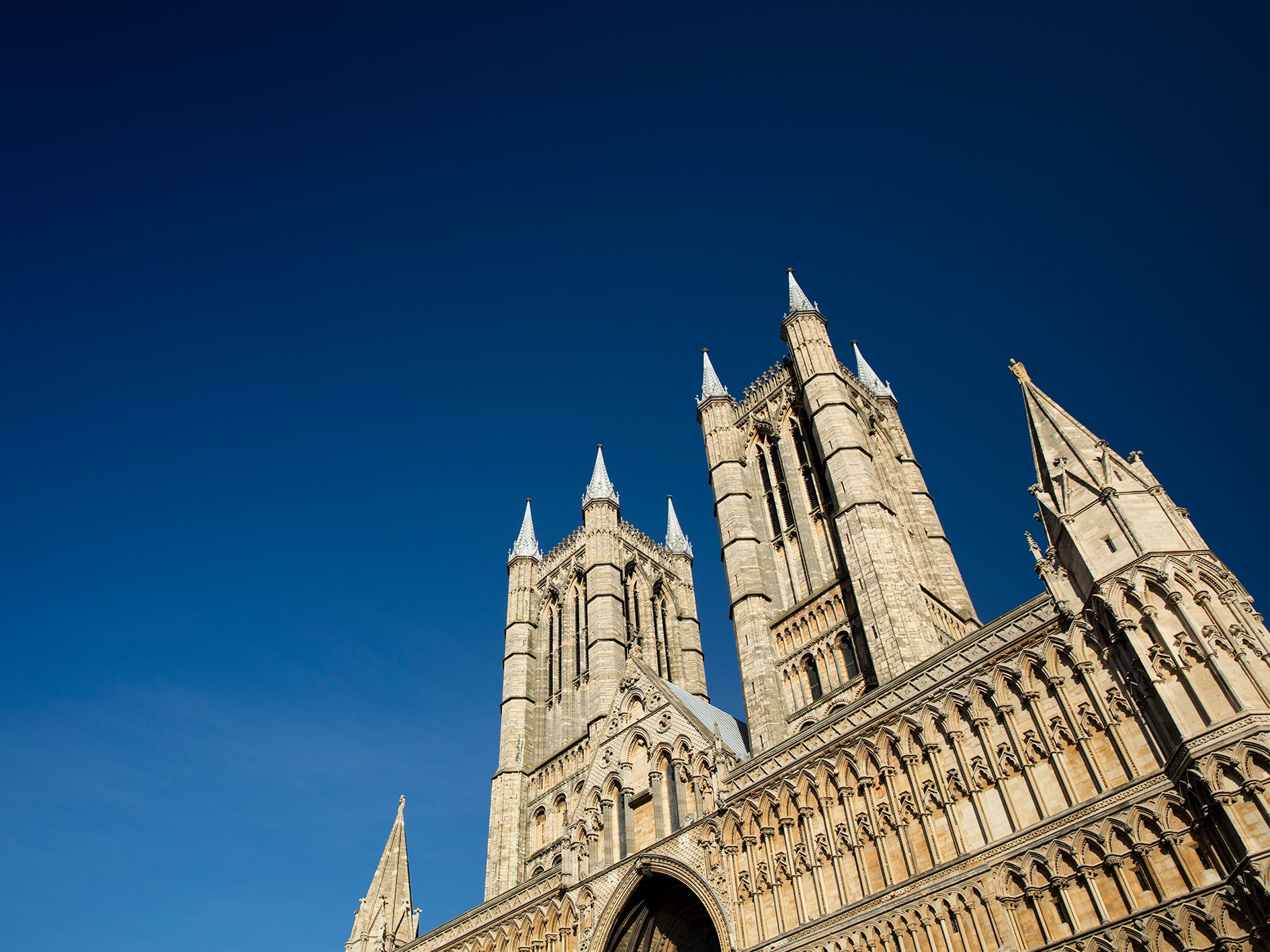
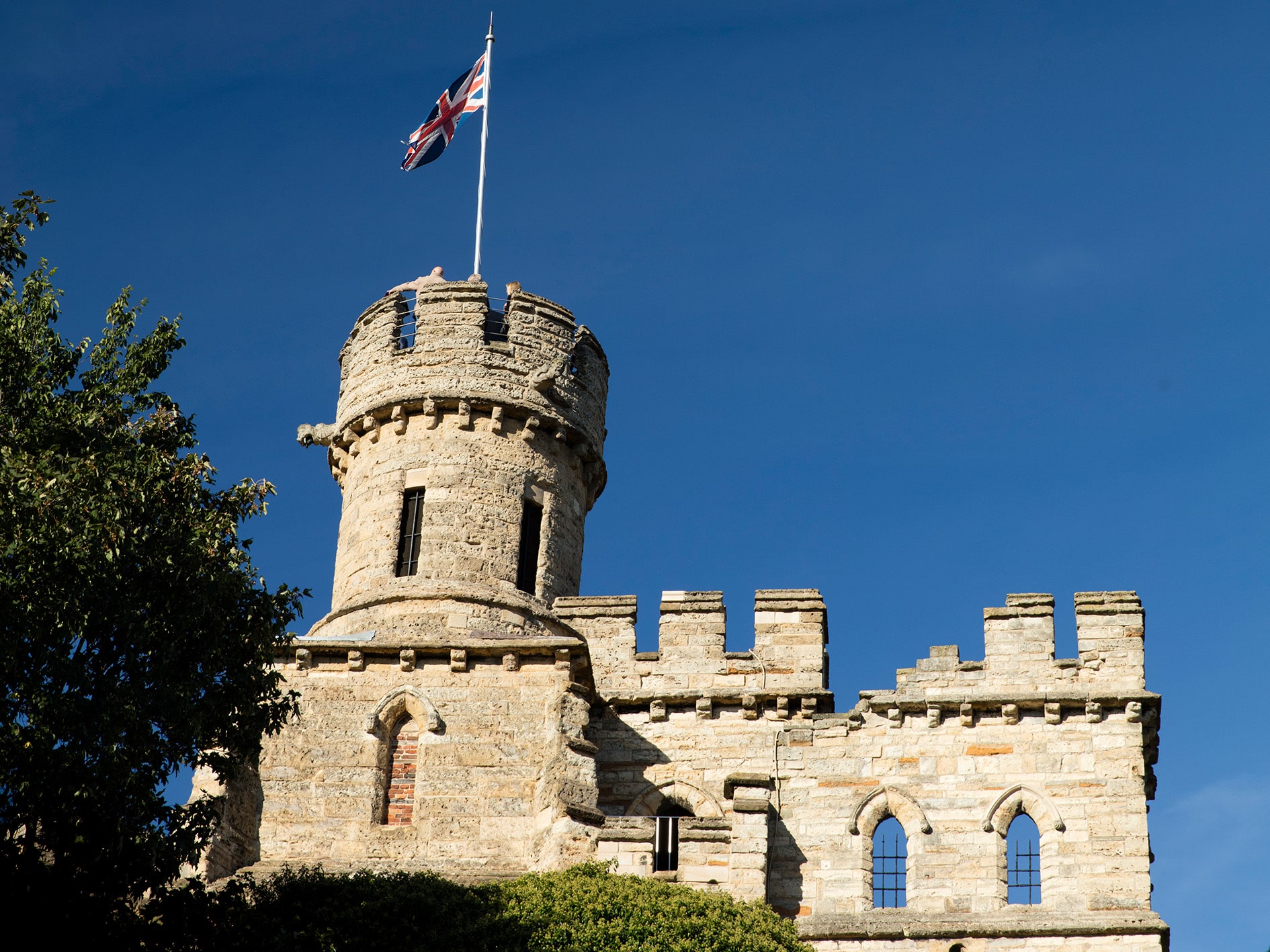
.jpg)
.jpg)
